







The summer solstice 2026 is an important astronomical event that marks the beginning of summer in the Northern Hemisphere. It is connected to the longest day of the year, the shortest night, the changing seasons, and the amount of sunlight people receive. Every year, millions of people search for the summer solstice date to learn when summer officially begins and why daylight changes throughout the year.
- ☀️ When Is the Summer Solstice 2026?
- 🌞 What Is the Summer Solstice?
- 📅 When Does Summer Start in 2026?
- Astronomical Start of Summer 2026
- Meteorological Start of Summer 2026
- Which Date Is the Official First Day of Summer?
- 🗓️ What Are the Summer Dates for 2026?
- 🌅 Why Is the Summer Solstice the Longest Day of the Year?
- 🌎 How Does Earth’s Tilt Cause the Summer Solstice?
- 🌤️ Do Days Start Getting Shorter After the Summer Solstice?
- 🌡️ Why Is the Summer Solstice Not Always the Hottest Day?
- ❄️ What Is the Winter Solstice 2026?
- 🌍 What Is a Summer Equinox?
- 🏛️ Summer Solstice Traditions and History
- 🔎 Why Is “Summer Solstice 2026” Trending?
- 📆 Summer Solstice 2025 vs. Summer Solstice 2026
- 🧭 How to Observe the Summer Solstice
- 🌞 Summer Sunlight and Safety
- ☀️ Conclusion
- ❓ Frequently Asked Questions About Summer Solstice 2026
In the United States, the summer solstice 2026 occurred on Sunday, June 21, at 4:24 a.m. Eastern Daylight Time (EDT). At that moment, Earth reached a point in its orbit when the Northern Hemisphere was tilted most directly toward the Sun. This event marked the astronomical start of summer in the United States and other parts of the Northern Hemisphere.
Although the summer solstice is often called the longest day of the year, it does not mean that the Sun stays in the sky for 24 hours in most places. Instead, it means that the day has more daylight than any other day of the year for locations outside the polar regions. The exact amount of daylight depends on where you live.
This guide explains the summer solstice 2026 date and time, the meaning of the solstice, why it happens, how it affects daylight, and how it differs from the meteorological start of summer. It also covers summer dates, the winter solstice, historical traditions, and popular summer solstice celebrations.
☀️ When Is the Summer Solstice 2026?
The summer solstice 2026 occurred on Sunday, June 21, in the United States. The exact astronomical moment was 4:24 a.m. EDT, or 8:24 a.m. Coordinated Universal Time (UTC). The date was June 21 across the United States, although the local clock time differed by time zone.
The solstice marks the moment when the Sun reaches its northernmost position in the sky relative to Earth’s equator. It is not a full day-long event. The solstice itself happens at one exact moment, but people generally use the date of that moment when talking about the summer solstice. NASA explains that the June solstice begins summer in the Northern Hemisphere and winter in the Southern Hemisphere. NASA’s explanation of the solstice.
Here are the key details for summer solstice 2026:
- Date: Sunday, June 21, 2026
- Time: 4:24 a.m. Eastern Daylight Time
- UTC time: 8:24 a.m. UTC
- Season beginning: Astronomical summer in the Northern Hemisphere
- Daylight: The longest daylight period of the year for most places outside the tropics and polar regions
- Night: Generally the shortest night of the year in the Northern Hemisphere
The summer solstice 2026 has already passed as of October 14, 2026. However, its date remains useful for people researching seasonal calendars, astronomy, past events, school assignments, or summer solstice traditions.


Also read:100+ Best Independence Day USA Wishes, Messages, and Quotes for July 4th (2026) 🎆
🌞 What Is the Summer Solstice?
The summer solstice is an astronomical event that happens when one hemisphere of Earth is tilted most directly toward the Sun. In the Northern Hemisphere, this event takes place in June. It marks the beginning of astronomical summer and usually brings the longest period of daylight of the year.
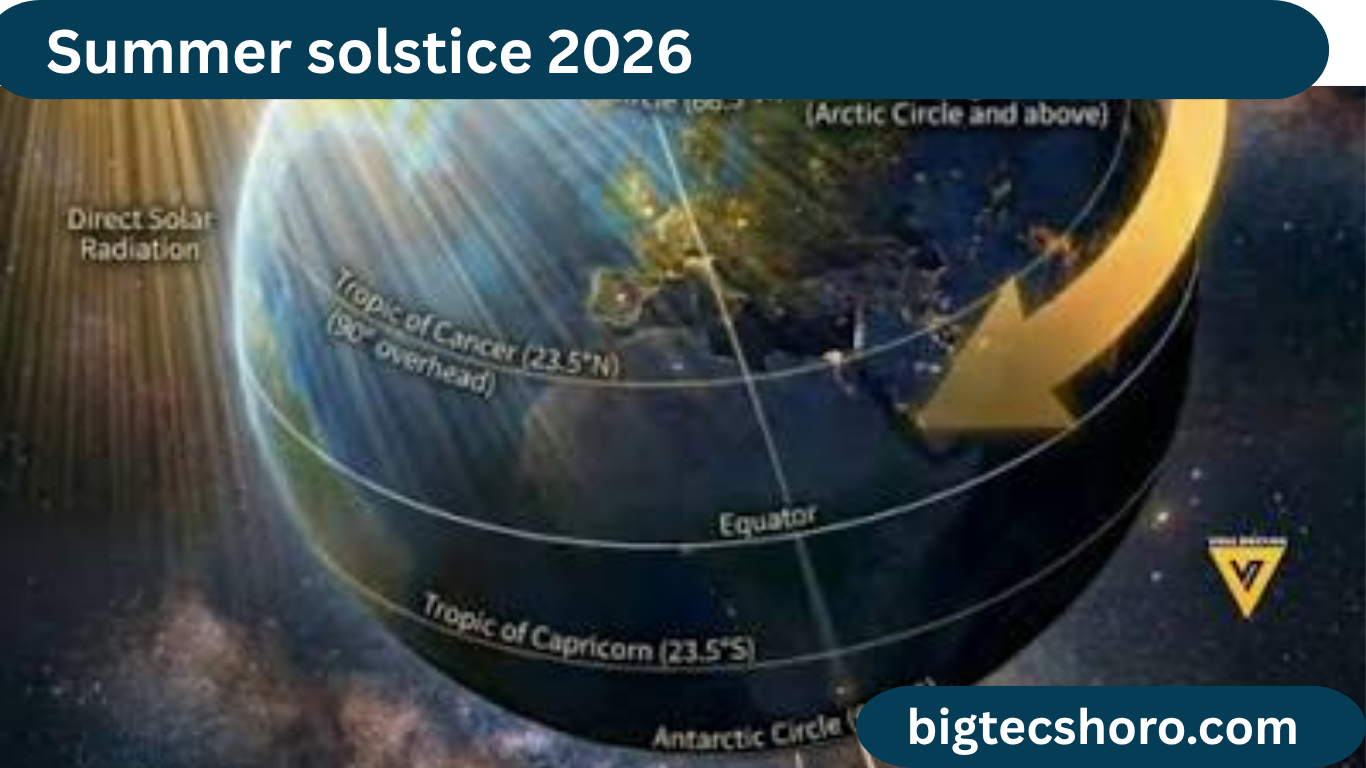
Earth does not stand straight up as it travels around the Sun. Its axis is tilted by about 23.5 degrees. Because of this tilt, different parts of Earth receive different amounts of sunlight throughout the year.
During the Northern Hemisphere’s summer, the northern half of Earth faces more directly toward the Sun. Sunlight reaches this region at a higher angle, and the Sun follows a longer path across the sky. This creates longer days and shorter nights.
At the summer solstice, the Sun reaches its northernmost position relative to Earth’s equator. Its direct rays fall over the Tropic of Cancer, an imaginary line located about 23.5 degrees north of the equator.
The word “solstice” comes from Latin words often translated as “Sun” and “to stand still.” The name refers to the way the Sun’s apparent position at sunrise and sunset changes very little for several days around the solstice. The Sun does not actually stop moving. Instead, the change in its position appears slower near this turning point in the yearly cycle.
The summer solstice is not the same as an equinox. An equinox occurs when the Sun crosses Earth’s equator in the sky, leading to nearly equal lengths of day and night in many locations. The summer solstice, by contrast, is associated with the greatest northern daylight period of the year.
📅 When Does Summer Start in 2026?
Summer has more than one official starting date, depending on which seasonal system you use. In the United States, people commonly use either the astronomical calendar or the meteorological calendar.
Astronomical summer began on Sunday, June 21, 2026, with the summer solstice. Meteorological summer began earlier, on June 1, 2026.
Both dates are correct within their own systems. The difference comes from how scientists and calendar makers define the seasons.
Astronomical Start of Summer 2026
The astronomical start of summer is based on Earth’s position in its orbit around the Sun. In the Northern Hemisphere, summer begins at the June solstice.
For 2026, that date was June 21. The solstice marks the moment when the Northern Hemisphere is tilted most directly toward the Sun. It is also the time of year when most locations north of the equator experience their longest daylight period.
Astronomical seasons do not always begin on the same calendar date. The solstice can occur on June 20 or June 21 in the United States, depending on the year and time zone.
Meteorological Start of Summer 2026
Meteorological summer starts on June 1 and ends on August 31 in the Northern Hemisphere. This system divides the year into four three-month seasons based on the calendar.
Under this definition, summer 2026 began on Monday, June 1. June, July, and August make up the meteorological summer months.
Meteorologists use this system because it makes it easier to compare weather patterns, temperatures, and climate records across different years. Each season has the same number of whole months, which helps with collecting and organizing climate data.
Which Date Is the Official First Day of Summer?
If you are asking when summer officially starts according to astronomy, the answer is June 21 for 2026 in the United States. If you are checking a weather report or a climate data set that uses meteorological seasons, summer started on June 1.
When someone asks, “When is the first day of summer?” they usually mean the astronomical date. That is why June 20 or June 21 is often described as the first day of summer in the United States.
🗓️ What Are the Summer Dates for 2026?
Summer dates depend on whether you use the astronomical or meteorological calendar. The two calendars are useful for different purposes, so it is important to know which one a source is using.
For the United States, the main summer dates for 2026 are:
| Seasonal milestone | Date in 2026 |
| Meteorological summer begins | Monday, June 1 |
| Astronomical summer begins | Sunday, June 21 |
| Meteorological summer ends | Monday, August 31 |
| Astronomical summer ends | Tuesday, September 22 |
Astronomical summer ended when the fall equinox occurred on September 22, 2026. Meteorological summer ended on August 31. Both dates have already passed as of October 14, 2026.
This difference can explain why one website says summer ends in August while another says it ends in September. The websites may be using different definitions rather than disagreeing about the season.
When Is the First Day of Summer 2026 in the USA?
The first astronomical day of summer in the United States was Sunday, June 21, 2026. The solstice occurred at 4:24 a.m. EDT.
For many people, the first day of summer is associated with school vacations, outdoor activities, warm weather, beach trips, gardening, and longer evenings. However, the actual weather depends on local climate conditions. The solstice does not guarantee that every state will experience hot or sunny weather that day.
When Is the Last Day of Summer 2026?
The answer depends on the seasonal calendar.
Meteorological summer ended on August 31, 2026. Astronomical summer ended on September 22, when the fall equinox occurred.
The phrase “last day of summer” can also have a cultural meaning. Some people think of Labor Day weekend as the end of summer activities in the United States, even though astronomical summer usually continues into September.
There is no single date that fits every use of the phrase. For weather statistics, the meteorological calendar is often more practical. For astronomy, the equinox is the relevant seasonal boundary.
🌅 Why Is the Summer Solstice the Longest Day of the Year?
The summer solstice is called the longest day of the year because it provides the greatest number of daylight hours in the Northern Hemisphere for most places outside the polar regions.
The main reason is Earth’s axial tilt. During the months leading up to June, the Northern Hemisphere gradually tilts more directly toward the Sun. This causes the Sun to rise earlier, follow a higher and longer path across the sky, and set later.
On the summer solstice, the Northern Hemisphere reaches its maximum tilt toward the Sun. After this point, the daylight period begins to decrease gradually, even though summer weather may continue for weeks or months.
The phrase “longest day” refers to daylight, not to the total length of a calendar day. A day still lasts about 24 hours. The difference is that more of those hours occur between sunrise and sunset.
For example, a location may receive more than 15 hours of daylight around the solstice, while another location closer to the equator may receive close to 12 hours. The exact number depends on latitude and local conditions.
Is June 21, 2026, the Longest Day of the Year?
For most locations in the United States, June 21, 2026, was the date of the summer solstice and the longest daylight period of the year. However, the exact clock times of sunrise and sunset do not always fall directly on the solstice date in every location.
This happens because sunrise and sunset times are affected by Earth’s orbit, its axial tilt, the location of the observer, and how local time is measured. The longest daylight period is associated with the solstice, but the earliest sunrise and latest sunset can occur on different dates.
Also read:Father’s Day Wishes for Husband ❤️: Heartfelt Messages to Make Him Feel Special
If you are checking sunrise and sunset times for a specific city, use a location-based astronomical calendar rather than assuming every place has identical daylight hours.
How Long Is the Longest Day in the United States?
There is no single number of daylight hours for the entire United States. The country covers a wide range of latitudes, from southern Florida to Alaska.
In general, places farther north experience longer daylight periods around the June solstice. Northern Alaska can experience continuous daylight during part of the summer, while southern states receive long but more typical daylight periods.
Cities at similar latitudes may still have slightly different sunrise and sunset times because of longitude, time zones, terrain, and local horizon conditions.
🌎 How Does Earth’s Tilt Cause the Summer Solstice?
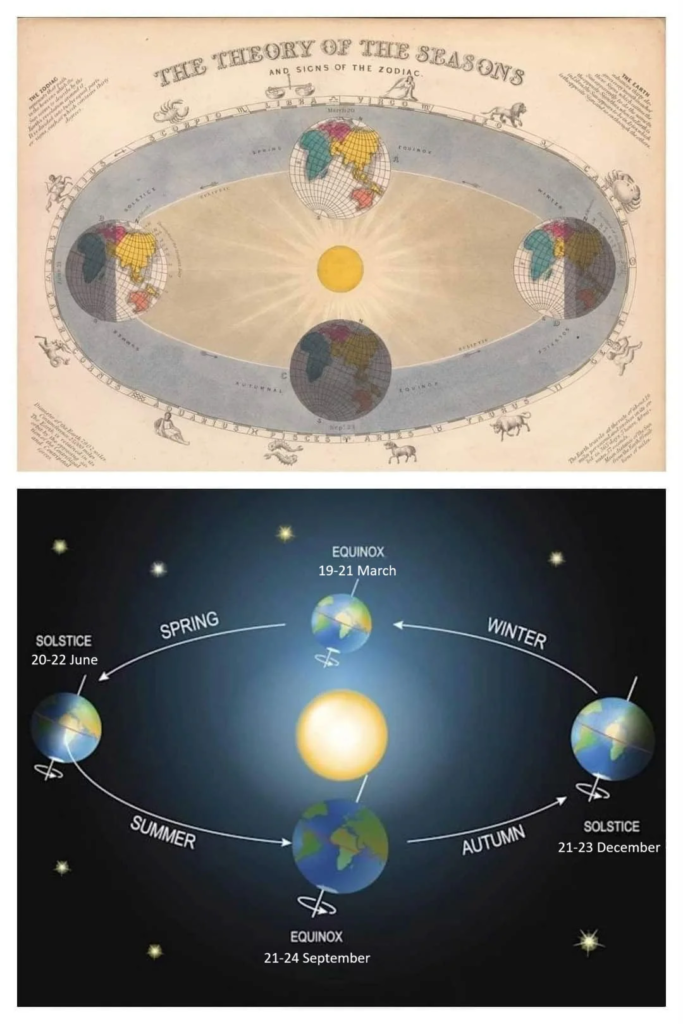
Earth’s axis is tilted by about 23.5 degrees relative to the plane of its orbit around the Sun. This tilt is the main reason Earth experiences seasons.
As Earth travels around the Sun, the direction of its axis remains nearly fixed in space over the course of a year. Because of this, the Northern Hemisphere faces toward the Sun during one part of the year and away from it during another.
During June, the Northern Hemisphere is tilted toward the Sun. Sunlight reaches the ground at a more direct angle, and daylight lasts longer. These conditions help warm the land and ocean over time.
During December, the Northern Hemisphere tilts away from the Sun. Sunlight arrives at a lower angle, and the days are shorter. This is why winter occurs in the Northern Hemisphere while summer occurs in the Southern Hemisphere.
Earth’s distance from the Sun is not the main cause of summer and winter. In fact, Earth is closest to the Sun in early January, during winter in the Northern Hemisphere. The axial tilt has a much greater effect on seasonal sunlight than the modest changes in Earth-Sun distance.
What Happens to the Sun at the Summer Solstice?
At the June solstice, the Sun appears at its northernmost point relative to Earth’s equator. At solar noon, it reaches its highest position in the sky for the year in many locations outside the tropics.
Solar noon is the moment when the Sun reaches its highest point in the local sky. It does not always occur at exactly 12:00 p.m. on a clock because of time zones, longitude, and the shape of Earth’s orbit.
The Sun’s path across the sky changes slowly around the solstice. For a few days before and after the event, its position at sunrise and sunset may seem almost unchanged. This appearance helps explain the origin of the word “solstice.”
🌤️ Do Days Start Getting Shorter After the Summer Solstice?
Yes. In the Northern Hemisphere, daylight begins to decrease after the summer solstice. The change starts slowly and becomes more noticeable as summer moves toward fall.
During the weeks before the solstice, the Sun rises earlier and sets later. After the solstice, the sunrise and sunset pattern gradually reverses. Sunrise generally becomes later, sunset generally becomes earlier, and the total daylight period decreases.
The amount of change depends on location. At higher latitudes, the difference in daylight from one week to the next can be more noticeable than it is closer to the equator.
This change does not mean summer temperatures drop immediately. Land and oceans store heat, and they take time to warm up and cool down. As a result, the hottest part of the year often occurs after the summer solstice.
In many parts of the United States, July and sometimes August are hotter than June. This seasonal delay is one reason the longest day of the year is not always the hottest day of the year.
When Do the Days Start Getting Longer Again?
In the Northern Hemisphere, days begin getting longer again after the winter solstice in December. The winter solstice is the shortest daylight period of the year for most locations outside the polar regions.
After that event, the daylight period gradually increases as the Northern Hemisphere begins tilting more toward the Sun. The change continues through winter and spring until the next summer solstice.
In the Southern Hemisphere, the pattern is reversed. Days begin getting longer after the June winter solstice and become shorter after the December summer solstice.
🌡️ Why Is the Summer Solstice Not Always the Hottest Day?
The summer solstice provides the longest daylight period, but it does not necessarily produce the highest temperature. This is because Earth’s surface does not heat up instantly.
Even after the Sun reaches its highest seasonal position, the ground, buildings, lakes, and oceans can continue to absorb more energy than they release. Temperatures may keep rising for several weeks before the balance changes.
This effect is known as seasonal lag. It helps explain why many areas of the United States experience their warmest weather in July or August instead of on the solstice in June.
Local weather patterns also matter. Cloud cover, rainfall, wind, humidity, and air masses can change temperatures from one day to the next. A cloudy June day may be cooler than a sunny day in late July, even though June has longer daylight.
The solstice is therefore an astronomical marker, not a temperature forecast. It tells us about Earth’s position and sunlight, but it cannot predict the exact weather for a city.
❄️ What Is the Winter Solstice 2026?
The winter solstice is the opposite seasonal event to the summer solstice. In the Northern Hemisphere, it occurs in December and marks the beginning of astronomical winter.
The December solstice is the time when the Northern Hemisphere is tilted most directly away from the Sun. It brings the shortest daylight period and the longest night of the year for most places outside the polar regions.
In 2026, the winter solstice occurs on December 21 in the United States. After this event, daylight begins to increase gradually in the Northern Hemisphere.
The summer and winter solstices happen because Earth’s axis remains tilted as the planet moves around the Sun. They are not caused by changes in the Sun’s energy output over the year.
In the Southern Hemisphere, the seasons are reversed. The June solstice marks the beginning of winter there, while the December solstice marks the beginning of summer.
What Is the Difference Between a Summer Solstice and a Winter Solstice?
The main difference is the direction of Earth’s tilt relative to the Sun.
During the summer solstice in the Northern Hemisphere, the hemisphere tilts toward the Sun and receives its longest daylight period of the year. During the winter solstice, it tilts away from the Sun and receives its shortest daylight period.
Both events occur once each year and mark important turning points in the seasonal cycle. They also provide a useful way to understand why daylight changes throughout the year.
The longest day and the shortest day are not caused by Earth moving closer to or farther from the Sun. They are caused mainly by Earth’s axial tilt.
🌍 What Is a Summer Equinox?
The phrase “summer equinox” is often used in online searches, but it is not the standard astronomical name for the event that begins summer. The correct term is “summer solstice.”
An equinox occurs in March and September, when the Sun crosses the celestial equator. Around these dates, day and night are close to equal in length in many parts of the world.
Also read:Remorse Synonym Guide: Meaning, Examples, and 100 Clear Alternatives
A solstice occurs in June and December, when the Sun reaches its farthest apparent position north or south of the celestial equator.
The distinction is simple: the June solstice marks the start of astronomical summer in the Northern Hemisphere, while the September equinox marks the start of astronomical fall.
People may search for “summer equinox 2026” because they are looking for the first day of summer. If that is the goal, the summer solstice is the correct event to check.
🏛️ Summer Solstice Traditions and History
People have observed the Sun’s changing position for thousands of years. Long before modern calendars and scientific instruments, communities watched sunrise, sunset, and seasonal patterns to help track time and understand changes in nature.
The summer solstice has been important in many cultures. In some places, it became linked to harvests, planting cycles, religious observances, community gatherings, and celebrations of light.
These traditions differ widely. Not every culture celebrates the solstice in the same way, and not everyone who observes it attaches a religious or spiritual meaning to the event.
Stonehenge and the Summer Solstice
Stonehenge in England is one of the best-known places associated with the summer solstice. The ancient stone monument has a notable relationship with the direction of sunrise around the solstice, which has made it a focus of public interest and archaeological study.
People gather there to observe the sunrise and take part in the event. The site is also important as a protected historic monument, so visitors are expected to follow rules designed to protect the stones and surrounding landscape.
The alignment of the monument makes the solstice an opportunity to connect astronomy with human history. However, explanations of the site’s original purpose should be treated carefully because researchers continue to study its construction and use.
Midsummer Celebrations
In parts of Europe, midsummer celebrations take place around the summer solstice. These events may include music, dancing, community meals, flowers, outdoor gatherings, and local traditions.
Midsummer is not exactly the same as the astronomical solstice in every country. Some communities celebrate on a fixed date, while others use a weekend or a traditional calendar.
The name also does not mean that the season is halfway through according to every calendar. It is a cultural term associated with the middle of the summer season in some traditions.
Summer Solstice Events in the United States
Summer solstice celebrations also take place in the United States. One well-known example is the annual Summer Solstice Celebration in Santa Barbara, California.
The 52nd annual Santa Barbara celebration took place June 19–21, 2026, with the theme “WAVE.” The event included a parade, live music, food vendors, and community activities. The parade was scheduled for Saturday, June 20, at noon, while events at Alameda Park continued through the weekend. City of Santa Barbara event information.
This kind of event shows how the solstice can be celebrated as a community and arts occasion, even by people who do not follow a specific solstice tradition.
Because festival dates, programs, and entry rules can change each year, people planning to attend a future celebration should check the organizer’s official website before traveling.
🔎 Why Is “Summer Solstice 2026” Trending?
Searches for summer solstice 2026 often increase as June approaches. People want to know when the longest day of the year will happen, when summer begins, and whether the solstice falls on June 20 or June 21.
The topic also attracts interest from students, teachers, astronomy enthusiasts, travelers, photographers, and people who enjoy seasonal events. Some people search for sunrise times or ways to celebrate the day, while others want to understand why daylight changes throughout the year.
Social media can also increase attention around the solstice. Photos of sunrise, sunset, outdoor festivals, and famous locations such as Stonehenge can encourage people to learn more about the event.
However, a keyword appearing in search suggestions does not prove that it is currently trending across the entire internet. Search activity can vary by location, date, and platform. Since June 21, 2026, has already passed, people searching now may be looking for historical details, event coverage, or information to plan for a future solstice.
For reliable dates and astronomical explanations, official science and government sources are more useful than unsourced social media posts.
📆 Summer Solstice 2025 vs. Summer Solstice 2026
The summer solstice does not fall on the same calendar date every year in every time zone. It usually occurs around June 20 or June 21 in the United States.
In 2025, the June solstice occurred on June 20 at 10:42 p.m. EDT. In 2026, it occurred on June 21 at 4:24 a.m. EDT. These are different local dates and times because the exact moment of the solstice changes from year to year.
The variation is connected to the way Earth completes its orbit around the Sun and the way calendar years are organized. A calendar year has 365 days, or 366 days in a leap year, while Earth’s seasonal cycle does not fit into an exact number of whole calendar days.
As a result, solstice dates and clock times shift slightly each year. Time zones can also make the same astronomical event fall on different local dates around the world.
This is why it is best to check the solstice date for the specific year and location rather than assuming that summer always begins on June 21.
🧭 How to Observe the Summer Solstice
You do not need special equipment to observe the summer solstice. You can enjoy the longer daylight, notice the Sun’s position, or use the occasion to learn more about the changing seasons.
One simple option is to spend time outdoors during daylight. A walk in a park, a picnic, gardening, or watching the sunset can help you notice the seasonal change. Remember that the solstice does not guarantee comfortable weather, so check the local forecast and take precautions against heat and strong sunlight.
You can also compare sunrise and sunset times from different dates. Looking at a calendar or astronomy app can show how the daylight period changes before and after the solstice.
If you are interested in photography, the long evening light may provide opportunities to capture landscapes and sunsets. Use appropriate eye protection when observing the Sun. Never look directly at the Sun through a camera, binoculars, or telescope without a suitable solar filter designed for that equipment.
For families and students, the solstice can be a useful learning activity. You can track the length of a shadow at the same time each day or use a globe and a light source to demonstrate Earth’s axial tilt. These simple activities can make an abstract astronomy concept easier to understand.
🌞 Summer Sunlight and Safety
Longer days provide more time for outdoor activities, but summer sunlight can also create health and safety concerns. The amount of ultraviolet (UV) radiation reaching a person depends on factors such as the Sun’s height, cloud cover, altitude, location, and the amount of time spent outdoors.
A long day does not mean UV levels remain equally strong from sunrise to sunset. UV radiation is generally strongest around the middle of the day, although conditions vary by location and weather.
To protect yourself during outdoor activities, use sunscreen as directed, wear sunglasses that block UV rays, choose protective clothing, and seek shade when possible. Drink enough water during hot weather and avoid prolonged activity in extreme heat.
Children, older adults, outdoor workers, and people exercising outdoors may need extra care during heat waves. Local weather alerts can help you decide when to move activities indoors or change the time of day.
The solstice itself does not cause a sudden increase in temperature or automatically create dangerous conditions. It is an astronomical event, while heat and UV risks depend on local environmental conditions.
☀️ Conclusion
The summer solstice 2026 occurred on June 21 in the United States, marking the beginning of astronomical summer in the Northern Hemisphere. It brought the longest daylight period of the year for most locations in the region and highlighted how Earth’s axial tilt affects the changing seasons.
🌍 Understanding the summer solstice helps explain why daylight hours change throughout the year, why summer temperatures often peak after the longest day, and how different cultures celebrate this astronomical event. Whether you are interested in astronomy, seasonal traditions, or the first day of summer, the solstice offers a simple way to explore Earth’s relationship with the Sun.
🌞 Although the summer solstice 2026 has passed, its scientific meaning remains relevant. Remember that astronomical summer begins with the solstice, while meteorological summer starts on June 1. Both systems help us understand and track the changing seasons.
❓ Frequently Asked Questions About Summer Solstice 2026
Can the summer solstice happen on June 19?
Yes, the exact date can vary by year and time zone. Although the summer solstice in the United States usually falls on June 20 or June 21, calendar dates can differ in other places and years because the astronomical moment does not follow the calendar perfectly.
Does the summer solstice affect tides?
The solstice does not directly cause a unique tide pattern. Tides are mainly affected by the gravitational pull of the Moon and Sun, along with local coastline shape, ocean depth, and weather. The Sun’s position is part of the wider system that influences tides, but the solstice is not itself a special tide event.
Is the summer solstice the same time everywhere in the world?
Yes, the astronomical event occurs at the same moment worldwide. However, local clock times and calendar dates differ according to time zones. The June solstice marks summer in the Northern Hemisphere and winter in the Southern Hemisphere.
Why does the summer solstice not always fall on the same date?
Earth’s orbit and the calendar year do not match in an exact whole-number pattern. The solstice moment shifts slightly from year to year, and local time zones can change the date shown on a calendar. Leap years help keep the calendar aligned with Earth’s seasonal cycle.
Does every place on Earth have a longest day on the summer solstice?
The familiar longest-day pattern applies to locations in the Northern Hemisphere outside the polar regions, where daylight generally reaches its annual maximum around the June solstice. Near the equator, daylight hours change much less over the year. Within the polar regions, some places experience continuous daylight for part of summer.