








The software industry changes faster today than ever before. Businesses now expect software products to launch quickly, adapt to customer needs, and improve continuously. Traditional development methods often struggle to keep up with this speed. That is why agile methods became one of the most important approaches in modern software engineering.
- What Is Agile Software Development Process?
- The History of Agile Software Development
- The Core Principles of Agile
- Customer Collaboration
- Small Iterations
- Continuous Feedback
- Flexibility
- Team Communication
- Working Software
- How Agile Software Development Works
- What Is Agile Process in Software Development?
- 1. Requirement Gathering
- 2. Product Backlog Creation
- 3. Sprint Planning
- 4. Development
- 5. Testing
- 6. Review
- 7. Retrospective
- What Is Scrum Agile Software Development Process?
- Key Scrum Roles
- Scrum Sprint
- Agile vs Traditional Waterfall Development
- Waterfall Approach
- Agile Approach
- Major Agile Frameworks
- Scrum
- Kanban
- Extreme Programming (XP)
- Lean Software Development
- Scaled Agile Framework (SAFe)
- Why Agile Became So Popular
- Faster Technology Changes
- Customer Expectations
- Startup Competition
- Remote Collaboration
- Cloud Computing
- Benefits of Agile Software Development
- Faster Delivery
- Improved Flexibility
- Better Customer Satisfaction
- Reduced Risk
- Higher Product Quality
- Stronger Team Collaboration
- Better Visibility
- Real-World Example of Agile Development
- How Agile Improves Software Quality
- What Is Meant by Agile Software Development Process in Business Terms?
- The Agile Mindset
- Common Agile Tools Used in 2026
- Agile Development Lifecycle
- Agile in Large Enterprises
- Challenges of Agile Software Development
- Why Some Agile Projects Fail
- Agile and Artificial Intelligence in 2026
- How Agile Supports Continuous Improvement
- Agile Roles Explained Simply
- What Are User Stories in Agile?
- Agile Estimation Methods
- Agile and Customer Experience
- Expert Insight: Why Agile Became More Important After Remote Work Growth
- How Agile Changes Team Culture
- Agile Metrics Used by Teams
- Common Agile Ceremonies
- Agile for Non-Software Industries
- The Future of Agile Software Development
- What Beginners Should Remember About Agile
- Conclusion
- FAQs About What Is Agile Software Development Process
Many beginners, students, startup founders, and business professionals often ask an important question: what is agile software development process?
The answer goes far beyond simple coding techniques. Agile is a complete mindset for building software through flexibility, collaboration, continuous improvement, and customer feedback.
In this comprehensive guide, you will learn exactly what is agile software development process, how it works, why companies use it, its major frameworks, advantages, challenges, real-world examples, expert insights, and future trends shaping agile in 2026.
This article is written in very easy English for readers in the United States and follows modern SEO and E-E-A-T principles to provide reliable, human-focused, and highly informative content.
What Is Agile Software Development Process?
The agile software development process is a modern approach to creating software through small, continuous improvements instead of building everything at once.
Instead of spending years developing a complete product before releasing it, agile teams work in smaller cycles called iterations or sprints. Each cycle delivers usable improvements that can be tested and reviewed quickly.
This method helps teams:



- Respond faster to change
- Improve collaboration
- Reduce development risks
- Deliver software more quickly
- Gather customer feedback continuously
The main goal of agile is flexibility and customer satisfaction.
When people ask what is agile process in software development, the simplest answer is:
Agile is a flexible way of building software step by step while continuously improving based on feedback.
The History of Agile Software Development
To fully understand what is agile in software development process, it helps to understand its origins.
Also read:What Does a Software Developer Do? Complete Career Guide for Beginners in 2026
Before agile became popular, many companies used a traditional method called the Waterfall model.
In the Waterfall approach:
- Planning happened first
- Development came later
- Testing happened near the end
- Customer feedback arrived very late
This created problems because businesses often discovered issues too late in the process.
In 2001, a group of software experts created the Agile Manifesto. This document introduced a new philosophy focused on:
- Individuals and interactions
- Working software
- Customer collaboration
- Responding to change
This movement transformed software development worldwide.
The Core Principles of Agile
Understanding agile principles is essential when learning what is meant by agile software development process.
Agile focuses on adaptability and continuous improvement.
Customer Collaboration
Customers stay involved throughout development instead of only at the beginning.
Small Iterations
Software is built in small pieces rather than massive releases.
Continuous Feedback
Teams gather feedback regularly to improve the product.
Flexibility
Changes can happen at almost any stage.
Team Communication
Developers, testers, designers, and managers work closely together.
Working Software
Agile prioritizes functioning software over excessive documentation.
How Agile Software Development Works
Agile development usually follows repeating cycles.
Each cycle includes:
- Planning
- Designing
- Developing
- Testing
- Reviewing
- Improving
Instead of waiting years for final delivery, teams release smaller updates continuously.
This allows businesses to react faster to:
- Customer needs
- Market changes
- Technical issues
- Competitor actions
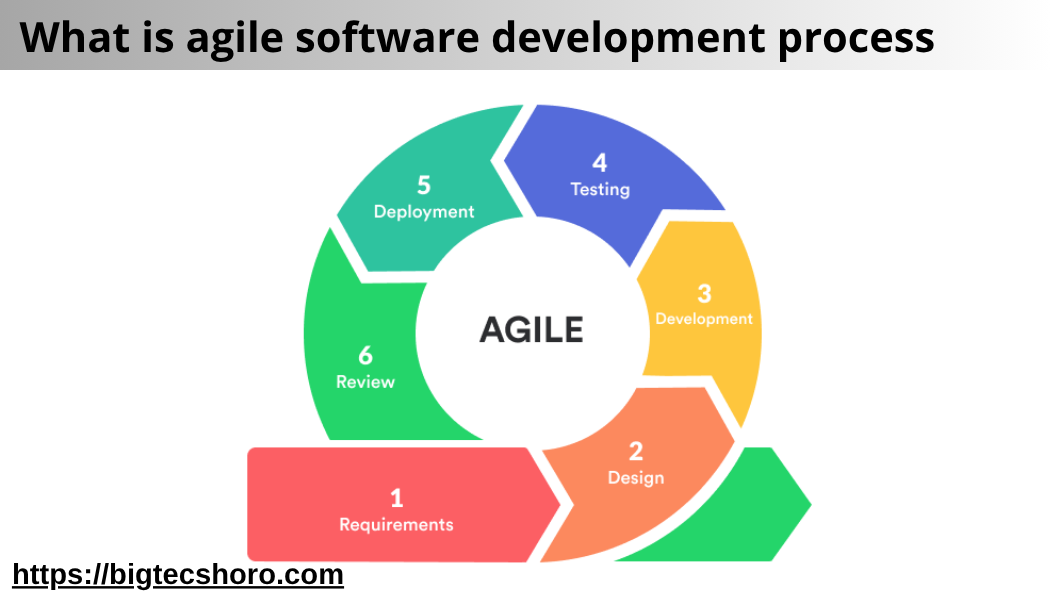
What Is Agile Process in Software Development?
The agile process in software development refers to the complete workflow teams follow when using agile methods.
Although frameworks vary, the process usually includes:
1. Requirement Gathering
Teams collect user needs and business goals.
2. Product Backlog Creation
A backlog is a prioritized list of tasks and features.
3. Sprint Planning
Teams decide what work to complete during the next sprint.
4. Development
Developers build software features.
5. Testing
Quality assurance teams test the software continuously.
6. Review
Stakeholders review completed work.
7. Retrospective
Teams discuss what went well and what needs improvement.
Then the cycle repeats.
What Is Scrum Agile Software Development Process?
One of the most popular agile frameworks is Scrum.
When people ask what is scrum agile software development process, they are referring to a structured agile method using short development cycles called sprints.
Scrum helps teams organize agile work efficiently.
Key Scrum Roles
Product Owner
Represents customer needs and manages priorities.
Scrum Master
Helps the team follow agile practices and remove obstacles.
Development Team
Builds, tests, and delivers software.
Scrum Sprint
A sprint usually lasts:
- 1 week
- 2 weeks
- 4 weeks
At the end of each sprint, teams deliver working software improvements.
Daily Scrum Meetings
Teams hold short daily meetings to discuss:
- What was completed
- What will be done next
- Any obstacles
These meetings improve communication and accountability.
Agile vs Traditional Waterfall Development
Understanding this comparison helps explain why agile became so popular.
Waterfall Approach
- Linear structure
- Difficult to change requirements
- Long development cycles
- Feedback arrives late
Agile Approach
- Flexible structure
- Easy adaptation
- Faster delivery
- Continuous customer input
Modern companies often prefer agile because markets change rapidly.
Major Agile Frameworks
Agile is not one single method.
Several frameworks exist.
Scrum
Most widely used framework.
Best for:
- Product teams
- Startups
- Software companies
Kanban
Focuses on visual workflow management.
Best for:
- Continuous delivery
- Support teams
- Operations
Extreme Programming (XP)
Focuses heavily on software quality and engineering practices.
Best for:
- Fast-moving technical projects
Lean Software Development
Inspired by manufacturing efficiency principles.
Focuses on:
- Reducing waste
- Maximizing value
Scaled Agile Framework (SAFe)
Designed for large enterprises managing many agile teams.
Why Agile Became So Popular
Several factors made agile dominant in modern software development.
Faster Technology Changes
Software markets evolve quickly.
Customer Expectations
Users expect regular updates and improvements.
Startup Competition
Companies must launch products rapidly.
Remote Collaboration
Agile supports flexible teamwork.
Cloud Computing
Modern infrastructure enables faster deployment cycles.
Agile matches the speed of today’s digital economy.
Benefits of Agile Software Development
Agile provides many important advantages.
Faster Delivery
Teams release usable software earlier.
Improved Flexibility
Changes are easier to manage.
Better Customer Satisfaction
Continuous feedback improves alignment with user needs.
Reduced Risk
Problems are identified earlier.
Higher Product Quality
Continuous testing improves reliability.
Stronger Team Collaboration
Frequent communication reduces misunderstandings.
Better Visibility
Stakeholders can monitor progress regularly.
Real-World Example of Agile Development
Imagine a company building a food delivery app.
Traditional approach:
- Build entire app first
- Launch after 2 years
Agile approach:
Sprint 1:
- User login system
Sprint 2:
- Restaurant search
Sprint 3:
- Online payments
Sprint 4:
- GPS tracking
Users test features early, and developers improve the app continuously.
Also read:How to Become a Software Developer: Complete Step-by-Step Career Guide for Beginners (2026 Updated)
This reduces costly mistakes.
How Agile Improves Software Quality
One major advantage of agile is continuous testing.
Instead of waiting until the end, teams test software throughout development.
Benefits include:
- Faster bug detection
- Better stability
- Improved user experience
- Reduced failure risk
Quality becomes part of the entire process.
Agile and DevOps
Modern software teams often combine Agile with DevOps.
Agile Focuses On
- Development process
- Team collaboration
- Iterative work
DevOps Focuses On
- Deployment automation
- Infrastructure
- Continuous delivery
Together, they create faster and more reliable software pipelines.
What Is Meant by Agile Software Development Process in Business Terms?
From a business perspective, agile is about reducing uncertainty.
Instead of investing millions into long projects without feedback, businesses can:
- Test ideas quickly
- Adjust strategies
- Reduce waste
- Improve customer alignment
Agile helps businesses stay competitive.
The Agile Mindset
Many people think agile is only about meetings and task boards.
That is incorrect.
Agile is mainly a mindset.
It values:
- Learning
- Adaptability
- Collaboration
- Continuous improvement
- Transparency
Without the right mindset, agile tools alone will not succeed.
Common Agile Tools Used in 2026
Modern teams use software tools to manage agile workflows.
Popular platforms include:
- Jira
- Trello
- Asana
- ClickUp
- Monday.com
- Azure DevOps
- Notion
These tools help teams track tasks, sprints, bugs, and progress.
Agile Development Lifecycle
The agile lifecycle includes several repeating stages.
Concept
Identify business goals.
Planning
Prioritize features and tasks.
Development
Build software incrementally.
Testing
Verify functionality continuously.
Release
Deliver software updates.
Feedback
Collect user input.
Improvement
Enhance the product based on findings.
Then the cycle repeats again.
Agile in Startups
Startups heavily favor agile methods because they need speed and flexibility.
Benefits for startups include:
- Faster product launches
- Easier pivots
- Lower development risk
- Faster customer validation
Agile supports innovation in uncertain environments.
Agile in Large Enterprises
Large corporations also use agile, although implementation becomes more complex.
Enterprise agile often requires:
- Coordination across many teams
- Shared planning systems
- Agile leadership training
- Scaled frameworks
Major companies worldwide now use agile practices.
Challenges of Agile Software Development
Agile is powerful, but not perfect.
Changing Requirements
Frequent changes can create confusion.
Poor Communication
Agile depends heavily on teamwork.
Scope Creep
Projects may grow endlessly without discipline.
Lack of Documentation
Some teams document too little.
Difficult Scaling
Large organizations face coordination challenges.
Success requires proper management and experience.
Why Some Agile Projects Fail
Many failed agile projects are not caused by agile itself.
Common failure reasons include:
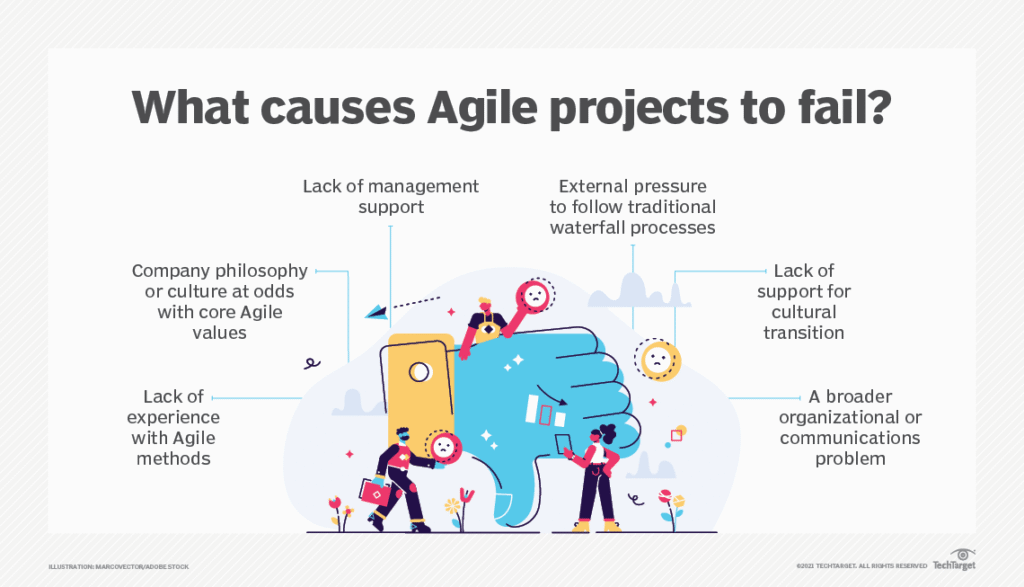
- Weak leadership
- Poor planning
- Lack of training
- Unrealistic expectations
- Miscommunication
- Incomplete customer involvement
Agile works best when teams truly understand its principles.
Agile and Artificial Intelligence in 2026
AI is transforming agile development rapidly.
Modern AI tools now help teams:
- Generate code
- Detect bugs
- Predict risks
- Automate testing
- Improve sprint planning
- Analyze user feedback
AI speeds up development, but human creativity and decision-making remain essential.
How Agile Supports Continuous Improvement
One of agile’s strongest features is reflection.
After each sprint, teams analyze:
- What worked well
- What failed
- What can improve
This creates long-term growth and learning.
Traditional methods often skip this reflection process.
Agile Roles Explained Simply
Product Owner
Decides what features matter most.
Scrum Master
Supports the team and removes obstacles.
Also read:Agile Software Development: Complete Guide for Modern Software Teams in 2026
Developers
Build the software.
Testers
Find bugs and improve quality.
Designers
Improve user experience and interface design.
Everyone collaborates closely.
Agile Documentation
A common myth says agile eliminates documentation.
That is false.
Agile still uses documentation, but it focuses on useful documentation instead of excessive paperwork.
Good agile documentation includes:
- User stories
- Technical notes
- API documentation
- Sprint goals
- Product requirements
The goal is efficiency, not documentation overload.
What Are User Stories in Agile?
User stories describe features from the customer’s perspective.
Example:
“As a customer, I want to track my delivery so I know when it will arrive.”
User stories help teams focus on real user needs.
Agile Estimation Methods
Agile teams estimate effort using methods like:
- Story points
- Planning poker
- Time estimation
- Velocity tracking
These methods help teams plan realistic workloads.
Agile and Customer Experience
Agile strongly improves customer experience because users influence development continuously.
Instead of waiting years for updates, customers see ongoing improvements.
This creates:
- Better products
- Higher satisfaction
- Faster issue resolution
Expert Insight: Why Agile Became More Important After Remote Work Growth
Remote and hybrid work changed software development dramatically.
Agile became even more valuable because it supports:
- Frequent communication
- Flexible collaboration
- Rapid adaptation
- Continuous visibility
Distributed teams need structured but flexible systems, and agile fits this need well.
How Agile Changes Team Culture
Agile does more than improve software.
It changes workplace culture.
Agile teams often become:
- More collaborative
- More transparent
- More adaptable
- More customer-focused
This cultural shift is one reason agile remains popular beyond technology companies.
Agile Metrics Used by Teams
Teams track performance using metrics such as:
- Sprint velocity
- Burn-down charts
- Lead time
- Cycle time
- Defect rates
These metrics help improve planning and productivity.
Common Agile Ceremonies
Agile teams hold structured meetings called ceremonies.
Sprint Planning
Define upcoming work.
Daily Standup
Short daily progress meeting.
Sprint Review
Demonstrate completed work.
Retrospective
Discuss improvements.
These meetings improve coordination.
Agile for Non-Software Industries
Agile methods now extend beyond software.
Industries using agile include:
- Marketing
- Education
- Healthcare
- Manufacturing
- Finance
Agile principles support many types of teamwork.
The Future of Agile Software Development
Agile continues evolving.
Future trends include:
- AI-assisted development
- Hyperautomation
- Remote-first agile teams
- Advanced analytics
- Cloud-native agile systems
- Faster deployment pipelines
Despite technological changes, the core agile philosophy remains highly relevant.
What Beginners Should Remember About Agile
Beginners often misunderstand agile as simply “working fast.”
Real agile is about:
- Smart adaptation
- Continuous learning
- Customer focus
- Sustainable teamwork
- Incremental progress
Speed matters, but quality and flexibility matter even more.
Conclusion
Understanding what is agile software development process is essential in today’s modern technology world.
Agile is a flexible, collaborative, and customer-focused method for building software through continuous improvement and small development cycles. Instead of waiting years for final releases, agile teams deliver value step by step while adapting to feedback and change.
The agile approach improves:
- Flexibility
- Speed
- Product quality
- Customer satisfaction
- Team collaboration
Frameworks like Scrum, Kanban, XP, and SAFe help organizations apply agile principles effectively.
As technology continues evolving in 2026, agile remains one of the most powerful and widely used software development approaches in the world.
Companies that embrace agile successfully often become faster, more innovative, and more competitive in rapidly changing markets.
FAQs About What Is Agile Software Development Process
What is agile software development process in simple words?
It is a flexible way of building software step by step while continuously improving based on customer feedback.
What is agile process in software development used for?
It helps teams create software faster, improve quality, and adapt to changing requirements.
What is scrum agile software development process?
Scrum is a popular agile framework that organizes work into short development cycles called sprints.
What is meant by agile software development process?
It means developing software through collaboration, flexibility, continuous testing, and incremental improvements.
What are the main benefits of agile development?
Main benefits include faster delivery, better customer satisfaction, reduced risks, and improved teamwork.