








Feeling care for someone who is going through a difficult time is a fundamental human experience. Expressing that care through writing or speech, however, often leads people back to the same handful of overused words like “kind,” “nice,” or “caring.”
- What Does Compassionate Mean?
- 100 Synonyms for Compassionate (Categorized by Nuance)
- Emotional Connection & Shared Feeling
- Gentle & Comforting Tone
- Unselfish Action & Generosity
- Forgiveness, Mercy, & Lenience
- Everyday Kindness & Practical Support
- Affectionate & Loving Warmth
- Polite, Respectful, & Welcoming Demeanor
- Understanding & Non-Judgmental Mindset
- Strong & Active Care (Formal & Literary)
- Antonyms for Compassionate (Words with Opposite Meanings)
- How to Choose the Right Word (Context Guide)
- Showing Compassion in Action: Key Phrases & Expressions
- Frequently Asked Questions (FAQs)
- What is the closest synonym for the word compassionate?
- What is another word for compassionate care?
- What is a word for someone who lacks compassion?
- Is sympathetic the exact same as compassionate?
- How do I use “compassionate” in a sentence?
- Conclusion
Whether you are writing an academic paper, drafting a professional email, crafting a story, or working on content marketing, expanding your vocabulary allows you to convey precise emotions and actions. Knowing the right synonym for compassionate helps you match the exact tone, degree, and context of your message.
This comprehensive guide breaks down 100 natural, highly relevant synonyms for compassionate, categorized by nuance and tone. You will also learn how to choose between similar words, explore antonyms, and discover practical ways to show compassion in your daily vocabulary.
What Does Compassionate Mean?
To understand what is another word for compassionate, it helps to start with a clear definition.
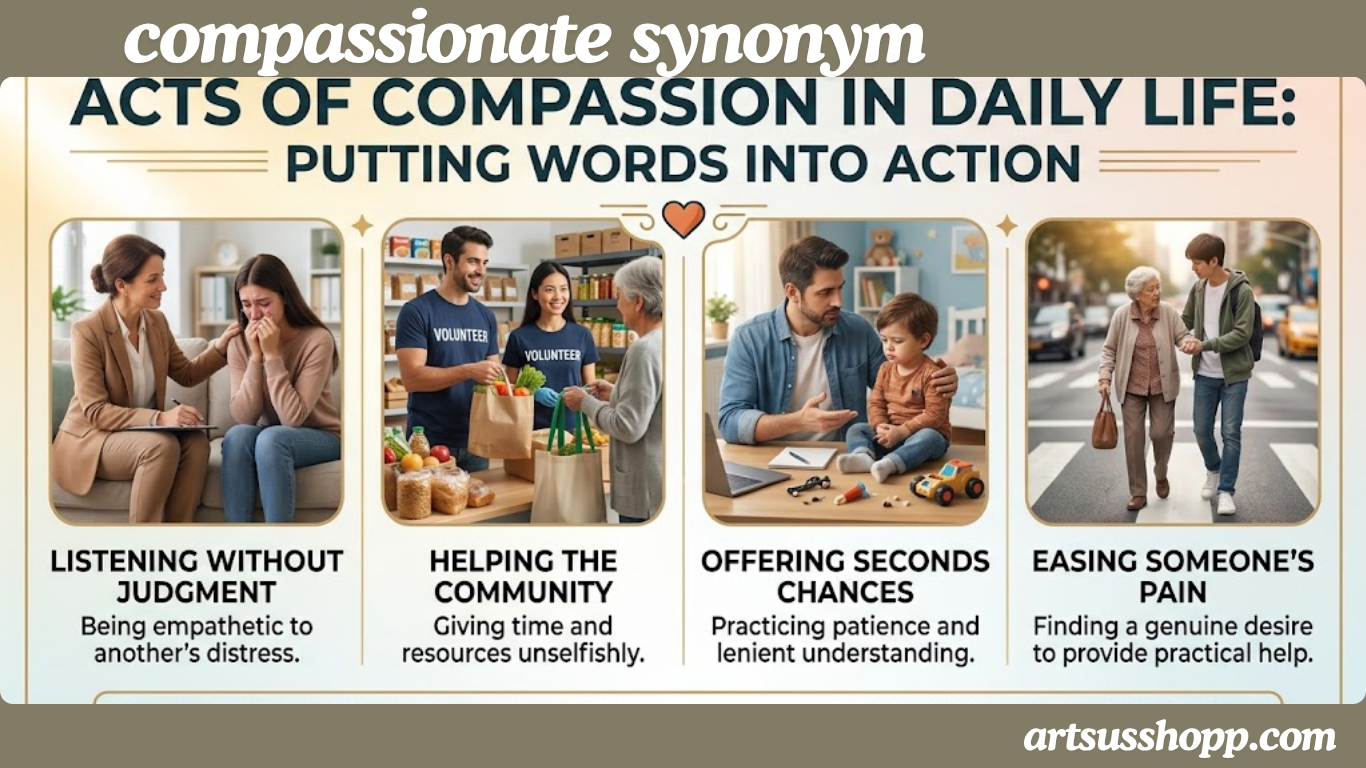
Being compassionate means recognizing the suffering or distress of another person and feeling a genuine desire to help ease their pain. It goes beyond merely noticing someone’s hardship. True compassion combines emotional awareness with helpful action.

The word originates from the Latin com (meaning “together with”) and pati (meaning “to suffer”). Therefore, at its core, having compassion means “suffering together” with someone and reaching out to offer comfort or assistance.
Understanding Key Nuances: Compassion, Empathy, Sympathy, and Kindness
People often search for a synonym for caring person, empathy synonym, or sympathy synonyms interchangeably. While these concepts are closely related, understanding their distinct differences will make your writing significantly clearer and more precise.
- Compassion is empathy combined with action. It means recognizing suffering, feeling moved by it, and taking steps to help alleviate it.
- Empathy is the ability to mentally step into another person’s shoes and feel what they are feeling from their perspective.
- Sympathy is feeling sorrow or concern for someone else’s misfortune from your own perspective, often expressed through condolences.
- Kindness is a general disposition of being friendly, generous, and considerate in everyday interactions, regardless of whether suffering is present.
100 Synonyms for Compassionate (Categorized by Nuance)
Below are 100 genuine words for compassionate organized by their specific tone, meaning, and context. Each entry includes its specific meaning and an example sentence to guide your usage.



Emotional Connection & Shared Feeling
These words focus on deep emotional awareness, showing that you feel or share another person’s emotional state.
- Empathetic
Meaning: Able to understand and feel the exact emotions of another person.
Example: The counselor offered an empathetic ear as the client shared her struggles. - Sympathetic
Meaning: Showing feelings of pity, sorrow, or concern for someone else’s trouble.
Example: She sent a sympathetic message to her colleague who lost a family member. - Commiserative
Meaning: Expressing shared grief, sorrow, or disappointment.
Example: They exchanged commiserative looks after the team lost the final match. - Tenderhearted
Meaning: Easily moved by love, pity, or the suffering of others.
Example: The tenderhearted boy rescued a stray bird from the storm. - Softhearted
Meaning: Gentle by nature and quick to feel sympathy toward others.
Example: My softhearted grandfather always adopts older dogs from the shelter. - Warmhearted
Meaning: Full of natural affection, kindness, and emotional warmth.
Example: The warmhearted host ensured every guest felt comfortable and welcomed. - Bighearted
Meaning: Exceptionally kind, generous, and loving toward everyone.
Example: A bighearted neighbor spent his weekend helping families clean up after the flood. - Gentle-hearted
Meaning: Possessing a peaceful, soft nature that dislikes seeing anyone hurt.
Example: Her gentle-hearted approach calmed the frightened child down quickly. - Open-hearted
Meaning: Frank, honest, loving, and emotionally accessible to others.
Example: He gave an open-hearted apology and offered to make things right. - Gracious-hearted
Meaning: Characterized by deep moral goodness, forgiveness, and mercy.
Example: The gracious-hearted leader chose to restore the community rather than assign blame. - Responsive
Meaning: Quick to react with care and attention to the feelings or needs of others.
Example: A responsive manager immediately addresses employee burnout. - Solicitous
Meaning: Showing attentive care, concern, and eagerness for someone’s well-being.
Example: The doctor was solicitous about the patient’s recovery after surgery.
Gentle & Comforting Tone
These terms describe a mild, soothing, and careful approach that avoids causing further pain or distress.
- Gentle
Meaning: Soft, careful, and moderate in action or speech to avoid causing harm.
Example: She used a gentle tone when explaining the bad news to her younger brother. - Tender
Meaning: Expressing gentle love, sensitivity, and protective care.
Example: The father gave his child a tender hug before leaving for work. - Comforting
Meaning: Providing emotional strength, relief, and ease during times of distress.
Example: A cup of warm tea and a listening friend can be incredibly comforting. - Mild
Meaning: Gentle and soft in manner, not harsh or severe.
Example: He gave a mild critique that encouraged the student to keep trying. - Soothing
Meaning: Bringing peace, calm, and relief to anxiety or physical pain.
Example: The nurse played soothing music to help the patient relax. - Consoling
Meaning: Offering comfort and hope to someone who is grieving or disappointed.
Example: She wrote a consoling letter to her best friend. - Reassuring
Meaning: Restoring confidence and reducing anxiety through supportive words or actions.
Example: The captain offered a reassuring nod to the nervous crew. - Peaceable
Meaning: Inclined toward peace, harmony, and gentle interactions.
Example: She is a peaceable woman who prefers resolving disputes through discussion. - Benign
Meaning: Showing a mild, harmless, and kindly disposition.
Example: The professor smiled with a benign expression during the presentation. - Mellow
Meaning: Softened and gentle in spirit, often due to maturity or experience.
Example: His mellow personality makes him very easy to talk to during stressful times.
Unselfish Action & Generosity
These synonyms emphasize taking tangible, selfless action to help others, often prioritizing someone else’s needs above your own.
- Altruistic
Meaning: Unselfishly concerned for the welfare of others without expecting a reward.
Example: Her altruistic work in rural health clinics improved hundreds of lives. - Philanthropic
Meaning: Actively seeking to promote the welfare of humanity through charitable giving or action.
Example: The family established a philanthropic foundation to fund higher education scholarships. - Selfless
Meaning: Putting the needs and interests of others ahead of one’s own.
Example: Firefighters show selfless dedication every time they respond to an emergency. - Unselfish
Meaning: Generous and willing to share resources, time, or recognition.
Example: It was unselfish of him to offer his spare seat to a stranger. - Charitable
Meaning: Generous in giving help, money, or food to those in need; forgiving in judgment.
Example: She takes a charitable view toward people who make honest mistakes. - Benevolent
Meaning: Characterized by a desire to do good and promote happiness in others.
Example: A benevolent donor covered the medical expenses for the family in need. - Generous
Meaning: Willing to give more money, time, or assistance than is strictly required.
Example: He was generous with his advice, helping young professionals build their careers. - Magnanimous
Meaning: Noble in spirit, generous, and forgiving toward rivals or those with less power.
Example: The champion was magnanimous in victory, praising his opponent’s hard work. - Bountiful
Meaning: Abundantly generous and giving freely.
Example: The community organized a bountiful donation drive for the food bank. - Public-spirited
Meaning: Motivated by a desire to improve society and help the local community.
Example: Public-spirited volunteers spent their Saturday cleaning the city park. - Sacrificial
Meaning: Giving up personal comfort, safety, or gain for the benefit of others.
Example: Parents often make sacrificial choices to give their children better opportunities.
Forgiveness, Mercy, & Lenience
When compassion means withholding harsh punishment, showing grace, or offering second chances, these terms fit best.
- Merciful
Meaning: Showing forgiveness and compassion toward someone whom it is in one’s power to punish.
Example: The judge was merciful, taking the defendant’s sincere remorse into account. - Lenient
Meaning: Tolerant, merciful, and not strict when enforcing rules or penalties.
Example: The instructor was lenient and accepted late assignments due to the weather outage. - Forgiving
Meaning: Ready to pardon mistakes, offenses, or debts without holding resentment.
Example: Being forgiving allowed them to repair their long-standing friendship. - Tolerant
Meaning: Showing willingness to accept beliefs, behaviors, or differences without judgment.
Example: A tolerant community welcomes diverse cultural traditions. - Clement
Meaning: Inclined to show mercy or mildness, especially toward offenders or subordinates.
Example: The military governor showed a clement attitude toward the local residents. - Pardon-minded
Meaning: Disposed to forgive errors rather than seek revenge or strict punishment.
Example: A pardon-minded leader focuses on rehabilitation rather than retribution. - Forbearing
Meaning: Patient and restrained when faced with provocation, mistakes, or delay.
Example: She remained forbearing despite the persistent interruptions during her talk. - Indulgent
Meaning: Showing readiness to accommodate the wishes or weaknesses of others kindly.
Example: The grandmother was indulgent, letting the children stay up late to watch a movie. - Long-suffering
Meaning: Bearing pain, inconvenience, or misconduct patiently over an extended period.
Example: The long-suffering teacher helped the student master the lesson step by step.
Everyday Kindness & Practical Support
These terms describe everyday helpful behavior, consideration, and active assistance in social or personal contexts.
- Kind
Meaning: Helpful, friendly, and considerate of other people’s feeling and needs.
Example: A kind word from a stranger brightened her entire morning. - Caring
Meaning: Displaying affection, attention, and active concern for someone’s well-being.
Example: He is a caring nurse who pays attention to every detail of patient comfort. - Thoughtful
Meaning: Anticipating what others need and showing care through small, meaningful actions.
Example: Bringing a hot meal to a sick neighbor was a thoughtful gesture. - Considerate
Meaning: Mindful of how one’s actions affect the rights, feelings, and comfort of others.
Example: Please be considerate and keep your phone muted during the performance. - Helpful
Meaning: Ready to give assistance, advice, or physical support to make a task easier.
Example: The helpful clerk showed me where to locate the missing documents. - Supportive
Meaning: Providing encouragement, practical help, or emotional backing.
Example: Having a supportive family made starting a new business much less intimidating. - Attentive
Meaning: Paying close attention to the needs, comfort, and wishes of others.
Example: An attentive server noticed our table needed extra water without being asked. - Obliging
Meaning: Eager to do favors and accommodate the requests of other people.
Example: The driver was obliging enough to make a quick extra stop along the route. - Accommodating
Meaning: Willing to fit in with someone’s wishes or adjust plans to help them.
Example: The hotel staff was accommodating and provided an early check-in. - Neighborly
Meaning: Helpful, friendly, and welcoming, like a good neighbor should be.
Example: It was neighborly of them to shovel the snow off our driveway. - Good-natured
Meaning: Naturally friendly, pleasant, and easygoing in temperament.
Example: His good-natured humor made everyone feel at ease right away. - Cooperative
Meaning: Willing to work together and assist others toward a common goal.
Example: The team was cooperative, sharing tasks evenly to finish ahead of deadline. - Useful
Meaning: Able to provide real, practical assistance or solution to a problem.
Example: Her practical suggestions were useful in solving the office dilemma.
Affectionate & Loving Warmth
These words are ideal when compassion is paired with deep personal affection, closeness, or fondness.
- Loving
Meaning: Showing strong affection, deep care, and devotion toward someone.
Example: They raised their children in a loving and supportive household. - Affectionate
Meaning: Displaying warmth, fondness, or tenderness clearly through words or actions.
Example: The affectionate cat curled up on her lap and purred softly. - Devoted
Meaning: Extremely loyal, loving, and committed to caring for a person or cause.
Example: He remained a devoted caregiver to his aging parents for many years. - Fond
Meaning: Having a warm affection, liking, or gentle care for someone.
Example: She held a fond memory of the teacher who first encouraged her writing. - Warm
Meaning: Expressing friendliness, affection, and welcoming energy toward others.
Example: The family gave us a warm welcome when we arrived at their home. - Adoring
Meaning: Showing deep, admiring love and care.
Example: The adoring mother watched her daughter perform on stage. - Doting
Meaning: Showing excessive or extremely attentive affection and care.
Example: The doting uncle bought his niece her favorite art supplies for her birthday. - Cherishing
Meaning: Holding someone dear and protecting them with loving care.
Example: She maintained a cherishing attitude toward her lifelong friendships. - Kindhearted
Meaning: Having a naturally kind, gentle, and loving character.
Example: A kindhearted volunteer spent every holiday serving meals at the shelter. - Soft
Meaning: Mild, gentle, and easily moved by affection or pity.
Example: He has a soft spot for anyone going through a tough time.
Polite, Respectful, & Welcoming Demeanor
These words describe a respectful, gracious, and socially welcoming approach to handling people with care.
- Gracious
Meaning: Courteous, kind, and pleasant, especially toward guests or subordinates.
Example: She was a gracious host who ensured everyone had what they needed. - Cordial
Meaning: Warm, sincere, deeply polite, and friendly in social interactions.
Example: The meeting opened with a cordial greeting from both department heads. - Hospitable
Meaning: Welcoming, generous, and attentive to guests, visitors, or strangers.
Example: The villagers were remarkably hospitable, offering shelter during the storm. - Amenable
Meaning: Open, agreeable, and willing to respond favorably to requests or ideas.
Example: She was amenable to adjusting her schedule to help a busy colleague. - Polite
Meaning: Showing regard for others through good manners, respect, and consideration.
Example: A polite response can diffuse a tense situation quickly. - Courteous
Meaning: Respectful and considerate of others in manner and speech.
Example: The clerk was courteous while answering all of our questions. - Civil
Meaning: Polite and respectful in social interactions, avoiding unnecessary conflict.
Example: Even during intense debates, they maintained a civil and respectful tone. - Respectful
Meaning: Showing deference, honor, and careful consideration for others’ feelings.
Example: It is important to be respectful when listening to perspectives different from your own. - Urban
Meaning: Refined, polite, and polished in social interactions.
Example: His urbane demeanor made him well-suited for international diplomacy. - Chivalrous
Meaning: Showing polite, protective, and generous behavior, especially toward those in need.
Example: His chivalrous offer to walk her home safely was greatly appreciated.
Understanding & Non-Judgmental Mindset
These terms emphasize open-mindedness, active listening, and withholding quick judgment when someone makes a mistake or struggles.
- Understanding
Meaning: Possessing insight into human nature, feelings, and motives without judging.
Example: An understanding supervisor helps employees navigate personal difficulties. - Perceptive
Meaning: Having keen insight and understanding of subtle emotions or situations.
Example: Her perceptive nature allowed her to notice a colleague was stressed before anyone else did. - Discerning
Meaning: Showing good judgment and deep understanding of complex human circumstances.
Example: A discerning mentor knows when to offer advice and when to simply listen. - Insightful
Meaning: Demonstrating a clear, deep, and sympathetic understanding of a problem.
Example: His insightful remarks helped the team resolve their interpersonal conflict. - Broad-minded
Meaning: Tolerant and open to different opinions, choices, and backgrounds.
Example: Her broad-minded perspective makes her a great mediator in community disputes. - Open-minded
Meaning: Willing to consider new ideas, feelings, and circumstances without prejudice.
Example: Keeping an open-minded attitude helps you connect with people from all walks of life. - Receptive
Meaning: Willing to listen, consider, and respond kindly to ideas or emotional needs.
Example: The director was receptive to the staff’s concerns about workload. - Sensitive
Meaning: Aware of and responsive to the feelings, needs, and distress of others.
Example: He was sensitive to the fact that his friend was still recovering from grief. - Aware
Meaning: Conscious of the current reality, feelings, or difficulties surrounding someone.
Example: Being aware of your surroundings allows you to offer help when it is needed most. - Mindful
Meaning: Consciously aware and careful about how words and actions impact others.
Example: Be mindful of your tone when delivering critical feedback.
Strong & Active Care (Formal & Literary)
These advanced or literary words describe deep, active, or systematic commitment to relieving distress.
- Humanitarian
Meaning: Seeking to promote human welfare and reduce suffering on a large scale.
Example: The organization dispatched humanitarian aid to regions affected by the earthquake. - Humane
Meaning: Marked by compassion, sympathy, and respect for humans and animals.
Example: Ethical farming standards mandate the humane treatment of livestock. - Benignant
Meaning: Kind, gentle, and beneficial in influence or intention.
Example: The monarch was remembered for her benignant reign and care for the poor. - Sanguine-hearted
Meaning: Naturally warm, hopeful, and generously disposed toward helping others.
Example: His sanguine-hearted optimism inspired the whole team to keep fighting for the cause. - Protective
Meaning: Showing a strong desire to keep someone safe from harm or pain.
Example: She maintained a protective attitude toward her younger siblings. - Nurturing
Meaning: Encouraging, supporting, and nourishing the growth and well-being of others.
Example: The school creates a nurturing environment where students can flourish. - Pitying
Meaning: Feeling or expressing sorrow and compassion for those in unfortunate states.
Example: Rather than giving a pitying look, she offered practical assistance. - Well-meaning
Meaning: Having good intentions to help, even if the result is not perfect.
Example: She is a well-meaning neighbor who always tries to assist, even when unasked. - Paternal
Meaning: Showing protective, guiding, and compassionate care characteristic of a father.
Example: He offered paternal advice to the young intern navigating her first job. - Maternal
Meaning: Displaying protective, warm, and nurturing care characteristic of a mother.
Example: Her maternal instincts kicked in when she saw the lost child in the store. - Brotherly
Meaning: Showing kindly, loyal, and supportive care suited to a fellow human being.
Example: They treated each other with brotherly affection and mutual respect. - Sisterly
Meaning: Demonstrating warm, protective, and understanding care toward another.
Example: She offered sisterly support during her friend’s job transition. - Public-minded
Meaning: Focused on the well-being and needs of the broader community.
Example: The town council benefited from several public-minded leaders. - All-embracing
Meaning: Including, accepting, and caring for everyone without distinction or exception.
Example: His all-embracing philosophy made everyone feel valued in the group. - Self-effacing
Meaning: Modest, humble, and quietly caring without seeking attention or praise.
Example: Her self-effacing generosity helped dozens of students finish college anonymously.
Antonyms for Compassionate (Words with Opposite Meanings)
Understanding what is the opposite of compassionate helps sharpen your writing when contrasting caring behavior with harsh or indifferent traits.
A lack of compassion can range from simple emotional distance to active cruelty.
Direct Antonyms (Cold or Indifferent)
- Cruel: Willfully causing pain or suffering to others without concern.
- Unfeeling: Devoid of emotion, sympathy, or sensitivity to another’s distress.
- Callous: Emotionally hardened, insensitive, and indifferent to suffering.
- Indifferent: Having no interest, sympathy, or concern for someone’s situation.
- Cold-hearted: Lacking affection, warmth, or sympathy.
- Hardhearted: Unmoved by pity or emotional appeals.
Additional Antonyms by Context
| Context | Compassionate Trait | Opposite Trait (Antonym) |
| Enforcing Rules | Merciful / Lenient | Severe / Harsh / Unforgiving |
| Social Demeanor | Warm / Hospitable | Distant / Hostile / Aloof |
| Resource Sharing | Generous / Altruistic | Selfish / Stingy / Greedy |
| Emotional Response | Empathetic / Solicitous | Apathetic / Unconcerned / Heartless |
How to Choose the Right Word (Context Guide)
With so many options in the compassionate thesaurus, choosing the best word depends on your target audience, formal context, and writing style.
1. Formal & Professional Writing
In workplace emails, executive communications, or formal reports, select words that sound professional and precise.
- Best choices: Considerate, accommodating, responsive, supportive, professional, respectful.
- Example: “Thank you for your considerate response regarding our project timeline extension.”
2. Academic & Policy Writing
When writing essays, research papers, or policy proposals, choose precise, elevated vocabulary.
- Best choices: Altruistic, philanthropic, humanitarian, humane, magnanimous, benevolent.
- Example: “The government instituted humanitarian measures to support displaced families.”
3. Creative & Narrative Writing
In novels, personal essays, or storytelling, choose words that convey vivid character traits and emotional depth.
- Best choices: Tenderhearted, softhearted, consoling, protective, cherishing, warmhearted.
- Example: “His tenderhearted nature made it impossible for him to walk past someone in need.”
Showing Compassion in Action: Key Phrases & Expressions
Sometimes single words are not enough. In English, we use specific action phrases to describe someone demonstrating care. Here are common expressions related to show compassion synonym search queries:
- To show compassion / To have compassion: Demonstrating active care toward someone in need.
Example: “The community showed immense compassion during the crisis.” - To feel compassion: Experiencing an inner emotional pull toward helping someone suffering.
Example: “She felt compassion for the displaced workers.” - Act of kindness: A specific, deliberate action done to help someone else.
Example: “Paying for the person’s coffee behind you is a simple act of kindness.” - Compassionate care: Specialized, attentive care provided to patients, elderly individuals, or those in recovery.
Example: “Hospice workers provide compassionate care to patients and their families.”
Frequently Asked Questions (FAQs)
What is the closest synonym for the word compassionate?
The closest general synonyms for compassionate are caring, kind, and empathetic. If you are describing someone who actively feels another’s pain and wants to help, empathetic or sympathetic are the closest matches. If you are describing helpful behavior, caring or benevolent work best.
What is another word for compassionate care?
Common alternatives for “compassionate care” include supportive care, humane treatment, attentive care, tender care, and nurturing support. In healthcare settings, it is often referred to as patient-centered care.
What is a word for someone who lacks compassion?
Words for someone who lacks compassion include callous, unfeeling, cold-hearted, apathetic, hardhearted, and indifferent.
Is sympathetic the exact same as compassionate?
No, they are slightly different. Being sympathetic means you feel sorry for someone’s bad luck from your own point of view. Being compassionate goes one step further—it combines that feeling with an active desire or effort to relieve their suffering.
How do I use “compassionate” in a sentence?
You can use it to describe a person, an action, or a policy:
- Describing a person: “She is a compassionate doctor who listens carefully to every patient.”
- Describing an action: “Offering his coat to the stranded traveler was a compassionate gesture.”
- Describing a policy: “The city introduced a compassionate housing plan for the homeless.”
Conclusion
Expanding your vocabulary with synonyms for compassionate allows you to write with greater clarity, precision, and emotional resonance. Whether you choose empathetic for deep emotional understanding, benevolent for generous actions, or considerate for daily professional polite interactions, matching the right word to your context ensures your message connects naturally with your readers.
Try replacing general words like “kind” or “nice” in your next essay, email, or story with one of these 100 alternatives to make your writing instantly more engaging and vivid.