







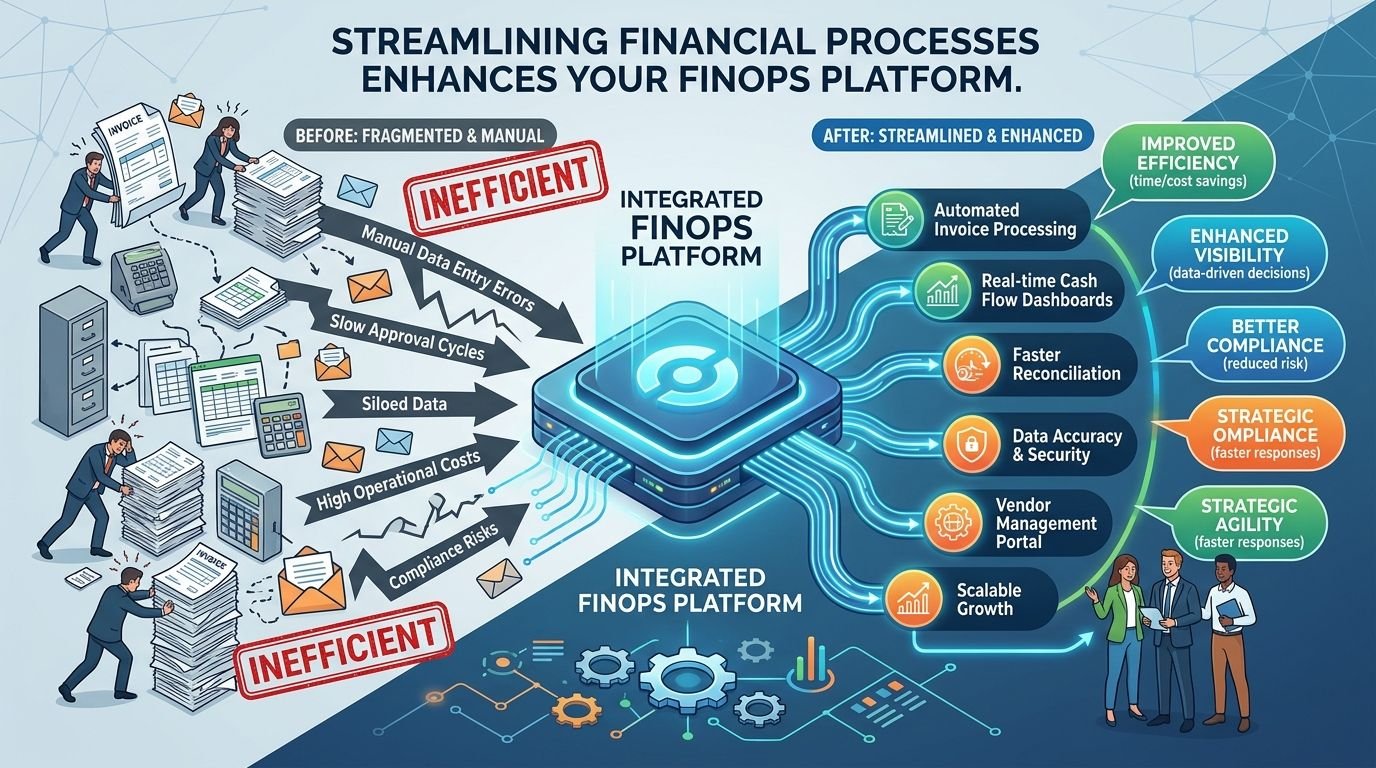

In the world of accounting and finance, efficiency is more than just a buzzword—it’s a necessity. Streamlining financial processes can significantly enhance your Financial Operations Platform, transforming routine tasks into seamless workflows that drive your business forward. The focus on optimizing these processes is paramount for businesses aiming to maintain competitive advantage. This article explores the benefits of streamlining financial processes, the key features of an effective Financial Operations Platform, the role of automation in improving financial workflows, and how to measure success with key performance indicators (KPIs).
Streamlining Financial Processes for Enhanced Efficiency
Streamlining financial processes involves revising and refining the way financial tasks are executed to improve speed and accuracy. One critical element in this pursuit is the use of an Internal Controls Framework. This framework helps ensure that all financial activities comply with established standards and regulations, thereby reducing the risk of errors and fraud. Implementing such controls not only boosts efficiency but also strengthens the reliability of financial reports. Moreover, employing efficient methods like the Accrual Basis Accounting system allows for a more accurate depiction of a company’s financial health by recording revenues and expenses when they are incurred, not when cash changes hands. This method provides a clearer picture of business operations, aiding in better decision-making and long-term planning. Lastly, a well-organized Depreciation Schedule is vital for managing asset values over time, which directly influences tax planning and financial forecasting. By streamlining these schedules, businesses can ensure compliance with GAAP (Generally Accepted Accounting Principles) and optimize their tax amortization strategies, leading to potential cost savings. In this context, leveraging a Financial Operations Platform can further enhance these processes for overall better performance.
Key Features of an Effective Financial Operations Platform
An effective Financial Operations Platform should incorporate several key features to optimize financial processes. One such feature is the ability to facilitate Variance Analysis, which compares actual financial performance with budgeted figures to identify discrepancies and areas for improvement. This function is essential for maintaining financial discipline and accountability within a business.
Additionally, the platform should support seamless integration with forensic accounting tools. These tools are crucial for analyzing financial records to detect discrepancies and prevent fraud, thereby safeguarding the organization’s assets. Integrating these capabilities into your platform enhances the accuracy and reliability of financial data.
Furthermore, the platform must support comprehensive Compliance Risk Assessment. This process involves evaluating potential compliance risks and implementing strategies to mitigate them, ensuring that the organization adheres to legal and regulatory standards. By addressing these risks proactively, businesses can avoid costly penalties and reputational damage.
Integrating Automation to Improve Financial Workflows
Automation is a game-changer for financial workflows, reducing manual errors and increasing efficiency. One of the primary areas where automation can make a significant impact is in Revenue Recognition Standards, ensuring that revenue is recorded accurately and in compliance with accounting principles. Automation tools help streamline these complex calculations, freeing up time for financial professionals to focus on strategic initiatives.
Another area where automation shines is in the management of Transfer Pricing Documentation, which is crucial for multinational companies. Automated systems can efficiently handle the intricate requirements of transfer pricing, ensuring compliance with international tax laws while minimizing administrative burdens.
Incorporating automation into your Financial Operations Platform can lead to substantial improvements. According to a recent study by McKinsey, businesses that leverage automation in their financial processes can reduce processing errors by up to 80%, demonstrating the transformative potential of these technologies.


Measuring Success: KPIs for Financial Process Optimization
To evaluate the success of streamlining efforts, businesses must establish relevant KPIs (Key Performance Indicators). One crucial KPI is the EBITDA (Earnings Before Interest, Taxes, Depreciation, and Amortization), which provides a clear view of operational profitability by excluding non-operational expenses. Monitoring EBITDA allows businesses to track performance and make informed financial decisions.
Another important KPI is Cash Flow Projection accuracy. Accurate projections ensure that businesses have sufficient liquidity to meet their obligations and invest in growth opportunities. By optimizing cash flow forecasting, companies can enhance their financial stability and strategic planning capabilities.
A final KPI to consider is the efficiency of Financial Statement Audits. The speed and accuracy of these audits can be improved by streamlining processes and implementing robust Internal Controls Frameworks. By tracking the time and resources required for audits, businesses can identify bottlenecks and continuously refine their processes for better outcomes.
Conclusion
Streamlining financial processes is a strategic move that enhances the capabilities of your Financial Operations Platform, leading to improved efficiency, accuracy, and compliance. By integrating automation and focusing on key features such as variance analysis and compliance risk assessment, businesses can drive substantial improvements in their financial workflows. Ultimately, these enhancements provide a solid foundation for achieving operational excellence and sustaining growth in an increasingly competitive marketplace.