








Modern businesses are facing a major challenge: managing increasing amounts of information, projects, tasks, and communication while maintaining productivity. Teams today often work across different locations, handle multiple projects at the same time, and depend on digital tools to organize their daily operations.
- What Is Peitner?
- How Peitner Uses Artificial Intelligence to Improve Workflows
- Why Businesses Need Platforms Like Peitner Today
- Key Features of Peitner
- AI-Powered Project Management
- Advanced Task Automation
- Team Collaboration Tools
- Cloud Storage and Information Management
- Business Workflow Organization
- Benefits of Using Peitner for Modern Businesses
- Improved Team Productivity
- Better Project Visibility
- Reduced Operational Complexity
- Enhanced Collaboration Between Teams
- More Efficient Business Growth
- Peitner for Different Types of Organizations
- Advanced Features That Make Peitner Valuable for Modern Workplaces
- Improved Project Monitoring and Performance Tracking
- Data-Driven Business Improvement
- Peitner Compared With Traditional Business Management Methods
- Peitner vs Manual Project Management
- Peitner vs Multiple Separate Software Tools
- Peitner vs Basic Task Management Applications
- How Businesses Can Get the Best Results From Peitner
- Define Clear Business Objectives
- Train Employees Properly
- Create Organized Workflows
- Regularly Evaluate Performance
- Potential Limitations of Peitner and AI Business Platforms
- Learning Curve for New Users
- Dependence on Digital Infrastructure
- Requires Proper Management Strategy
- Cost Considerations
- The Role of Artificial Intelligence in the Future of Business Platforms
- Expert Perspective: Why Integrated AI Platforms Matter
- Practical Examples of How Peitner Can Support Business Operations
- Example 1: Marketing Team Management
- Example 2: Software Development Teams
- Example 3: Growing Businesses
- Final Thoughts
- Frequently Asked Questions About Peitner
Traditional business management methods are no longer enough for many organizations. Spreadsheets, scattered communication channels, and disconnected software systems can create confusion, slow decision-making, and reduce team efficiency.
This is where Peitner enters as a modern technology solution designed to simplify business workflows. Peitner is an AI-powered software platform that focuses on project management, task automation, team collaboration, cloud storage, and improved business organization.
The purpose of Peitner is to bring different aspects of workplace management into one connected environment. Instead of using separate tools for planning projects, communicating with teams, storing files, and tracking progress, businesses can use an integrated platform that supports smoother operations.
Artificial intelligence has changed the way companies manage their work. AI-powered platforms can now analyze information, automate repetitive tasks, improve productivity, and help teams make better decisions. Peitner represents this movement toward intelligent business management where technology supports people rather than replacing them.
For startups, growing businesses, remote teams, and large organizations, having an efficient digital system is becoming essential. A platform like Peitner can help reduce unnecessary manual work, improve collaboration, and create a more organized approach to achieving business goals.
This comprehensive guide explores what Peitner is, how it works, its key features, benefits, practical applications, and why AI-driven business platforms are becoming increasingly important in today’s competitive environment.
What Is Peitner?
Peitner is an AI-powered business management platform designed to help organizations manage projects, automate workflows, collaborate with teams, and organize important business information.



At its core, Peitner combines several important business functions into one digital workspace. These functions may include:
- Project planning
- Task management
- Team communication
- Workflow automation
- Cloud-based file organization
- Business productivity improvement
The main goal of Peitner is to make complex business processes simpler and more efficient.
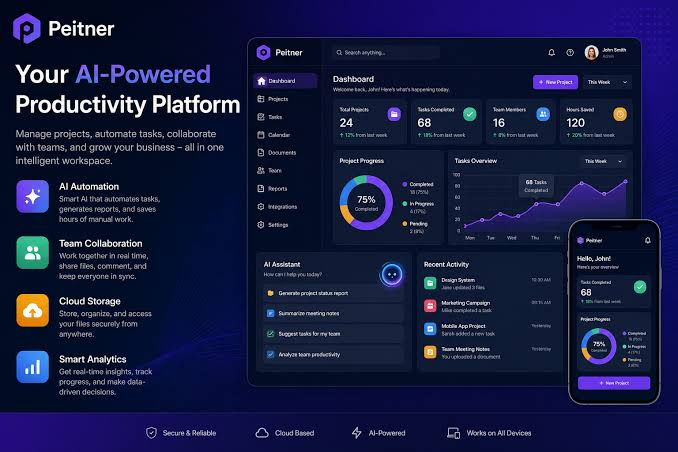
Many companies struggle because their work systems are divided between multiple applications. A team may use one platform for communication, another for documents, another for project tracking, and another for automation. Managing these separate systems can create inefficiencies.
Peitner follows a more connected approach by bringing essential business activities together.
The platform is based on the idea that productivity improves when teams have:
- Clear visibility into projects
- Better organization of tasks
- Faster communication
- Automated repetitive processes
- Easy access to important information
Instead of spending excessive time managing tools, employees can focus more on valuable work.
How Peitner Uses Artificial Intelligence to Improve Workflows
Artificial intelligence has become one of the most important technologies in modern business. Companies are increasingly using AI to improve efficiency, analyze information, and automate routine activities.
Peitner uses AI-focused concepts to support smarter workflow management.
The role of AI in platforms like Peitner can include:
Intelligent Task Management
Managing tasks is one of the biggest challenges in any organization.
Projects often involve multiple team members, deadlines, priorities, and dependencies. Without proper organization, important tasks can be delayed or overlooked.
Peitner helps create a more structured task management environment by allowing teams to organize responsibilities clearly.
A smarter task system can help users:
- Assign responsibilities
- Track progress
- Monitor deadlines
- Identify priorities
- Improve project visibility
This allows teams to understand what needs attention and what actions should happen next.
Automated Workflow Management
Many business processes involve repetitive activities.
Examples include:
- Sending routine updates
- Assigning repeated tasks
- Organizing information
- Creating reports
- Managing approvals
Automation reduces the amount of manual work required from employees.
Peitner’s automation-focused approach helps businesses create smoother workflows where routine processes can happen with less human effort.
This allows employees to spend more time on creative thinking, problem-solving, and strategic activities.
AI-Assisted Decision Support
Businesses often need to make decisions based on large amounts of information.
Without proper organization, important insights can be difficult to identify.
AI-powered systems can help by analyzing patterns, organizing data, and providing useful information that supports better decision-making.
For business leaders, this can improve planning and reduce uncertainty.
Why Businesses Need Platforms Like Peitner Today
The business environment has changed significantly over the last few years. Companies now operate in a faster, more digital, and more competitive world.
Several factors have increased the need for advanced business management platforms.
Growth of Remote and Hybrid Work
Remote work has become a major part of modern business operations.
Teams are no longer always located in the same office. Employees may work from different cities, countries, or time zones.
This creates new challenges:
- Communication gaps
- Difficulty tracking progress
- File organization problems
- Reduced visibility
Peitner supports digital collaboration by providing tools that help teams stay connected regardless of location.
Increasing Amounts of Business Data
Companies generate huge amounts of information every day.
This includes:
- Customer information
- Project details
- Documents
- Reports
- Team communications
Managing this information efficiently is becoming increasingly important.
Cloud-based platforms help businesses organize information and provide easier access to important resources.
Need for Higher Productivity
Businesses are always looking for ways to improve productivity.
However, productivity is not only about working faster. It is about reducing unnecessary work and improving processes.
Peitner focuses on helping teams work more efficiently by reducing confusion and improving workflow organization.
Key Features of Peitner
Peitner combines several business-focused features designed to support modern organizations.
AI-Powered Project Management
Project management is one of the most important areas of business success.
A successful project requires:
- Clear goals
- Proper planning
- Team coordination
- Deadline management
- Progress tracking
Peitner helps businesses manage projects through a more organized digital system.
Teams can benefit from:
- Better project visibility
- Organized task structures
- Improved collaboration
- Easier progress monitoring
A centralized project management system reduces the risk of information being lost across different platforms.
Advanced Task Automation
Automation is one of the strongest advantages of modern business software.
Manual tasks often consume valuable time. When employees spend too much time handling repetitive activities, they have less time for strategic work.
Peitner’s automation capabilities help organizations create more efficient workflows.
Examples of tasks that can benefit from automation include:
- Task assignments
- Status updates
- Workflow notifications
- Routine approvals
- Data organization
Automation improves consistency and reduces human errors.
Team Collaboration Tools
Strong teamwork is essential for business success.
Poor communication can lead to:
- Missed deadlines
- Confusion
- Duplicate work
- Reduced productivity
Peitner supports collaboration by creating a connected environment where teams can communicate and coordinate activities more effectively.
A good collaboration system allows employees to:
- Share updates
- Discuss projects
- Access information
- Coordinate responsibilities
This is especially valuable for remote and distributed teams.
Cloud Storage and Information Management
Modern businesses require reliable access to important files and documents.
Traditional storage methods can create problems such as:
- Duplicate files
- Lost documents
- Limited accessibility
Cloud-based storage provides a more flexible solution.
Peitner’s cloud storage approach helps businesses organize important information and make it available when needed.
Benefits include:
- Easier file access
- Better organization
- Improved collaboration
- Reduced dependence on physical storage
Business Workflow Organization
Every company has unique processes.
A good business platform should adapt to different organizational needs.
Peitner focuses on creating organized workflows that allow companies to structure their operations more effectively.
This can help businesses:
- Standardize processes
- Improve accountability
- Reduce delays
- Increase operational efficiency
Benefits of Using Peitner for Modern Businesses
Choosing the right business platform can have a significant impact on productivity and growth.
Peitner provides several potential advantages for organizations looking to improve their digital operations.
Improved Team Productivity
When teams have better systems, they spend less time searching for information and managing unnecessary processes.
Peitner helps employees focus on important activities by creating a more organized working environment.
Improved productivity comes from:
- Clear task management
- Reduced manual work
- Better communication
- Faster access to information
Better Project Visibility
One common problem in project management is lack of visibility.
Managers may struggle to understand:
- Current progress
- Delayed tasks
- Resource usage
- Upcoming deadlines
A centralized platform provides better awareness of project conditions.
This helps leaders make faster and more informed decisions.
Reduced Operational Complexity
Businesses often use many different tools to manage their work.
While individual tools may be useful, too many systems can create complexity.
Peitner helps simplify operations by bringing multiple functions into one environment.
This reduces the need to switch between different platforms.
Enhanced Collaboration Between Teams
Successful projects require cooperation between different departments.
Also read:Schoology Alfa: The Complete Guide to Online Learning, Course Management, and Student Success
A connected platform improves communication and makes teamwork easier.
Employees can collaborate more effectively when everyone has access to the same information.
More Efficient Business Growth
Growing companies need systems that can support expansion.
As businesses become larger, managing projects and information becomes more difficult.
Platforms like Peitner can provide a stronger foundation for scalable operations.
Peitner for Different Types of Organizations
Different businesses have different needs, but many can benefit from improved digital management systems.
Peitner for Startups
Startups often operate with limited resources and small teams.
They need efficient systems that allow them to move quickly.
Peitner can help startups:
- Organize early projects
- Manage team responsibilities
- Reduce manual processes
- Improve operational structure
A strong digital foundation can support future growth.
Peitner for Small and Medium Businesses
Small and medium-sized businesses often face challenges balancing growth with limited resources.
An efficient management platform can help them compete with larger companies.
Benefits may include:
- Better organization
- Improved customer management
- Faster workflows
- Stronger teamwork
Peitner for Large Enterprises
Large organizations manage complex operations involving many employees and departments.
They require systems that provide:
- Centralized information
- Better coordination
- Improved workflow management
- Greater operational control
AI-powered platforms can support enterprise-level efficiency.
Advanced Features That Make Peitner Valuable for Modern Workplaces
The real value of an AI-powered business platform is not only in managing daily activities but also in improving the way organizations operate over time. Peitner focuses on creating a connected digital environment where planning, communication, automation, and information management work together.
While basic project tools mainly help teams track tasks, advanced platforms aim to improve the complete workflow experience. This includes helping managers understand progress, helping employees complete work efficiently, and helping organizations create repeatable processes.
Smart Workflow Customization
Every business has different operating methods. A marketing agency, software company, manufacturing business, and consulting firm may all follow completely different workflows.
A flexible platform needs to support these differences rather than forcing every organization into the same structure.
Peitner’s workflow-focused approach allows businesses to organize processes according to their specific requirements.
Examples of customized workflows may include:
- Project approval processes
- Client management steps
- Internal review systems
- Team assignment structures
- Reporting procedures
Customization allows companies to build systems that match their actual working style.
Centralized Business Information Management
One major challenge in modern organizations is information fragmentation.
Important details may exist across emails, chat applications, documents, spreadsheets, and different software platforms. When information is scattered, employees spend more time searching and less time working.
A centralized platform like Peitner helps create a more organized information environment.
This approach provides advantages such as:
- Easier access to business data
- Better knowledge sharing
- Reduced duplication of information
- Improved team awareness
When employees can quickly find the information they need, decision-making becomes faster and more accurate.
Improved Project Monitoring and Performance Tracking
Successful project completion depends on continuous monitoring.
Managers need to understand whether projects are moving according to plans or whether adjustments are required.
Peitner supports project visibility by helping teams monitor important factors such as:
- Task completion status
- Project timelines
- Team responsibilities
- Workflow progress
Better visibility allows businesses to identify problems earlier and take corrective action before small issues become major delays.
Data-Driven Business Improvement
Modern companies increasingly rely on data to make decisions.
Instead of depending only on assumptions, organizations can analyze performance patterns and identify areas for improvement.
AI-powered business platforms can support this process by organizing information and helping teams understand operational trends.
For example, businesses may identify:
- Frequently delayed processes
- Resource management issues
- Workflow inefficiencies
- Areas requiring automation
This creates opportunities for continuous improvement.
Peitner Compared With Traditional Business Management Methods
Understanding how Peitner differs from traditional approaches helps explain why AI-based platforms are becoming more popular.
Peitner vs Manual Project Management
Traditional project management often depends on spreadsheets, emails, and manual updates.
Although these methods can work for small projects, they may become difficult to manage as organizations grow.
Common problems include:
- Outdated information
- Manual tracking errors
- Limited visibility
- Slow communication
Peitner offers a more connected approach by bringing project information and team activities into a structured digital environment.
Peitner vs Multiple Separate Software Tools
Many businesses use different applications for different purposes.
One tool may handle communication, another may manage documents, and another may track projects.
This creates a challenge known as software fragmentation.
Problems can include:
- Repeated data entry
- Confusing workflows
- Higher management costs
- Difficulty maintaining consistency
An integrated platform reduces these challenges by connecting important business functions.
Peitner vs Basic Task Management Applications
Simple task management applications are useful for personal organization and small teams.
However, larger organizations often need more advanced capabilities.
A complete business platform focuses not only on tasks but also on:
- Collaboration
- Automation
- Information management
- Business processes
- Long-term scalability
This makes AI-powered systems more suitable for complex operations.
How Businesses Can Get the Best Results From Peitner
Using a digital platform successfully requires more than simply adopting new software. Businesses need proper planning and implementation.
Define Clear Business Objectives
Before introducing any management platform, organizations should understand what problems they want to solve.
Possible objectives include:
- Improving communication
- Reducing manual work
- Increasing project efficiency
- Organizing company information
Clear goals help teams use technology more effectively.
Train Employees Properly
A powerful platform provides limited value if employees do not understand how to use it.
Organizations should provide:
- Basic training
- Usage guidelines
- Internal support
- Regular improvement sessions
Employee adoption plays an important role in achieving better results.
Create Organized Workflows
Technology works best when combined with good processes.
Businesses should review existing workflows and identify areas where improvement is needed.
Examples:
- Removing unnecessary approval steps
- Automating repetitive actions
- Improving communication methods
- Creating clear responsibilities
A well-designed workflow allows software to deliver maximum value.
Regularly Evaluate Performance
Business needs change over time.
Organizations should review whether their systems are still supporting their goals.
Regular evaluation can help identify:
- New automation opportunities
- Workflow problems
- Training requirements
- Areas for improvement
Continuous optimization ensures long-term benefits.
Potential Limitations of Peitner and AI Business Platforms
Although AI-powered platforms provide many advantages, businesses should also understand potential challenges.
A balanced view helps organizations make better technology decisions.
Learning Curve for New Users
New software systems often require time for employees to understand.
Teams may initially need adjustment periods before reaching full productivity.
Proper training and gradual implementation can reduce this challenge.
Dependence on Digital Infrastructure
Cloud-based platforms depend on reliable internet access and technical systems.
Organizations should consider:
- Data security practices
- Backup strategies
- Access management
Strong digital policies are important for protecting business information.
Requires Proper Management Strategy
A platform alone cannot solve organizational problems.
If a company has unclear goals or inefficient processes, software may not automatically fix those issues.
Technology works best when combined with:
- Good leadership
- Clear communication
- Effective planning
- Employee involvement
Cost Considerations
Businesses should evaluate whether the platform provides enough value compared with its investment.
The right solution should support measurable improvements in:
- Productivity
- Efficiency
- Time savings
- Business growth
The Role of Artificial Intelligence in the Future of Business Platforms
Artificial intelligence is changing how companies operate.
In the past, software mainly helped people store information and complete tasks. Modern AI-powered platforms are becoming more intelligent by helping organizations analyze information, automate activities, and improve decisions.
Future business management systems are likely to focus on:
Predictive Business Assistance
AI systems may increasingly help organizations anticipate future needs.
Examples include:
- Identifying possible project delays
- Suggesting workflow improvements
- Predicting resource requirements
This can help companies become more proactive.
Greater Automation Capabilities
Automation will continue expanding beyond simple repetitive tasks.
Future systems may assist with:
- Advanced reporting
- Smart scheduling
- Intelligent recommendations
- Automated business analysis
This allows employees to focus on higher-value activities.
More Personalized Work Experiences
Different employees have different working styles.
Future AI platforms may provide more personalized experiences by adapting to individual needs.
For example:
- Customized dashboards
- Personalized task recommendations
- Intelligent workflow suggestions
This could improve both efficiency and user satisfaction.
Expert Perspective: Why Integrated AI Platforms Matter
The future of business productivity is not only about having more tools. It is about creating better connections between people, information, and processes.
Many organizations already have access to multiple technologies, but the challenge is making these systems work together effectively.
An integrated platform like Peitner represents a broader shift in business technology:
From disconnected tools to connected ecosystems.
From manual processes to intelligent automation.
From reactive management to proactive decision-making.
The most successful companies will likely be those that combine human creativity with advanced digital support.
AI should not replace human judgment. Instead, it should remove unnecessary workload and provide better information for smarter decisions.
Practical Examples of How Peitner Can Support Business Operations
Example 1: Marketing Team Management
A marketing team may handle multiple campaigns, content schedules, customer communications, and performance reports.
Without proper organization, important deadlines may be missed.
A platform like Peitner can help teams:
- Organize campaign tasks
- Assign responsibilities
- Track progress
- Improve collaboration
This creates a smoother marketing workflow.
Example 2: Software Development Teams
Software projects often involve developers, designers, testers, and managers.
Coordination is essential for successful delivery.
An organized digital platform can help teams:
- Track development stages
- Manage assignments
- Monitor deadlines
- Improve communication
This supports more efficient project execution.
Example 3: Growing Businesses
A growing company may struggle as operations become more complex.
Processes that worked with a small team may become inefficient as the organization expands.
A structured platform can help businesses create stronger systems for future growth.
Final Thoughts
Peitner represents the growing movement toward intelligent business management solutions that combine automation, collaboration, and organized workflows.
In a business environment where speed, flexibility, and efficiency are increasingly important, companies need systems that help them manage complexity without creating additional challenges.
The value of Peitner comes from its focus on connected operations. By bringing together project management, automation, teamwork, and information organization, it supports a more efficient way of working.
However, successful technology adoption depends on more than choosing the right platform. Businesses must also create clear processes, support employees, and continuously improve how they use digital tools.
As artificial intelligence continues to develop, platforms like Peitner represent the future direction of workplace productivity. The strongest organizations will be those that combine advanced technology with human skills, creativity, and strategic thinking.
For companies looking to improve organization, reduce manual effort, and build more efficient workflows, AI-powered platforms provide an important opportunity to create smarter and more adaptable business environments.
Frequently Asked Questions About Peitner
What is Peitner mainly used for?
Peitner is designed as an AI-powered business platform that supports project management, workflow organization, team collaboration, automation, and digital information management.
Is Peitner suitable for small businesses?
Yes, small businesses can benefit from organized workflows, better communication, and improved task management, especially when they need systems that can support future growth.
Can Peitner help remote teams?
Yes, platforms focused on collaboration and cloud-based management are especially useful for remote teams because they improve communication and information access.
Does Peitner replace employees?
No. AI-powered platforms are designed to support employees by reducing repetitive work and improving efficiency. Human creativity, strategy, and decision-making remain essential.
How can companies prepare before using Peitner?
Companies should identify their goals, organize existing workflows, train employees, and create clear usage guidelines before implementation.
Is Peitner useful for project managers?
Yes. Project managers can benefit from improved visibility, task organization, workflow tracking, and better team coordination.