







Television has changed dramatically over the past decade. Where cable and satellite once dominated, more and more viewers are turning to IPTV — a technology that delivers TV content over the internet instead of traditional broadcast methods. Global demand for internet-delivered television continues to climb as households look for more flexible, device-agnostic ways to watch live sports, news, and entertainment without being tied to a fixed cable box or a long-term contract.
But what exactly is IPTV, how does it work, why has it become so popular, and — perhaps most importantly — what should you know before choosing a provider? This guide breaks down everything you need to understand about the technology, its legitimate uses, and the risks associated with unauthorized services.
A Brief History of IPTV
The concept of delivering television over internet protocol networks dates back to the late 1990s, when telecom companies began experimenting with ways to send video signals over the same infrastructure used for internet and phone service. By the mid-2000s, major telecom providers in Europe, Asia, and North America had launched commercial IPTV offerings, often bundled with home internet and phone packages. As broadband speeds improved and streaming technology matured, IPTV expanded beyond telecom bundles into standalone apps, smart TV platforms, and cloud-based services — paving the way for the diverse IPTV landscape that exists today.
What Does IPTV Mean?
IPTV stands for Internet Protocol Television. Instead of receiving channels through satellite signals or underground cables, IPTV delivers television content using standard internet connections. Video is broken into data packets, sent over the internet, and reassembled on your device in real time — similar to how streaming services like YouTube or Netflix work.
How Does IPTV Work?
IPTV relies on three core components:
- A content source — a broadcaster or service provider that encodes live TV signals or on-demand video into digital data.
- A delivery network — the internet infrastructure that transmits this data to end users.
- A receiving device — a smart TV, streaming box, smartphone, or computer running an IPTV app or player that decodes the stream and displays it.
There are generally three types of IPTV services:
- Live IPTV — real-time streaming of TV channels, similar to traditional broadcast TV.
- Video on Demand (VOD) — content libraries (movies, shows) that users can watch anytime.
- Time-shifted IPTV — allows viewers to pause, rewind, or replay content that already aired.
Behind the scenes, IPTV depends on several technical processes working together seamlessly:
- Encoding — raw video is compressed using codecs (such as H.264 or the more modern H.265/HEVC) to reduce file size without sacrificing too much visual quality.
- Multicasting or unicasting — live content is often distributed via multicast streams, where a single stream serves many viewers simultaneously, reducing strain on the network compared to sending an individual stream to every user.
- Middleware — software that manages the user interface, electronic program guides (EPGs), channel lists, and subscriber authentication.
- Adaptive bitrate streaming — the stream’s quality automatically adjusts based on the viewer’s current internet speed, helping to minimize buffering during fluctuations in connection quality.
Because IPTV runs over standard internet infrastructure, service quality is closely tied to a user’s internet connection. A stable broadband connection with sufficient bandwidth — generally at least 10-25 Mbps for HD or 4K content — is typically recommended for a smooth viewing experience.



IPTV vs. Traditional Cable and Satellite TV
| Feature | IPTV | Cable/Satellite |
|---|---|---|
| Delivery method | Internet | Coaxial cable / satellite signal |
| Infrastructure needed | Internet connection | Dedicated cabling/dish |
| Flexibility | Watch on multiple devices, on demand | Often limited to a set-top box |
| Setup | App or device-based | Professional installation often required |
What Devices Support IPTV?
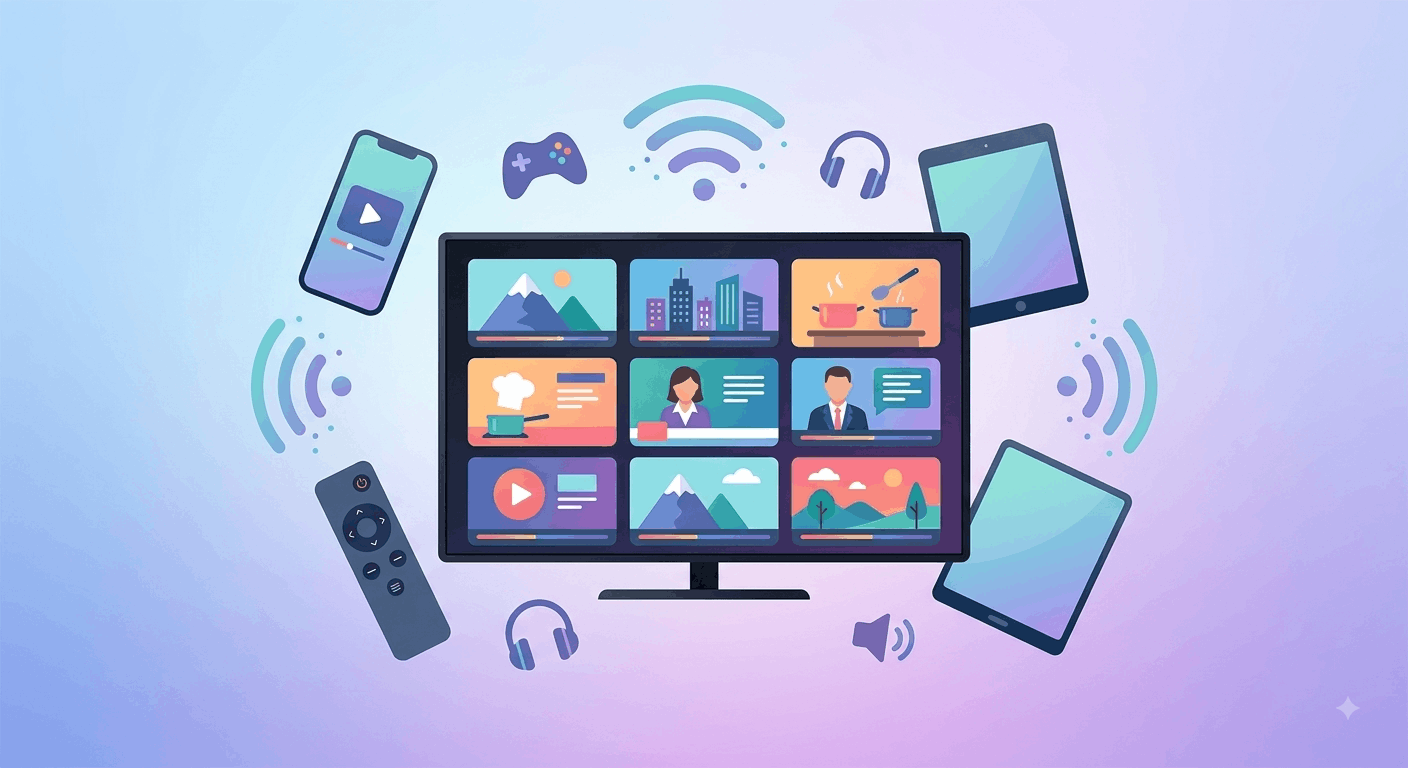
One of the appeals of IPTV is its broad device compatibility. Legitimate IPTV services and apps commonly run on:
- Smart TVs (via built-in apps or third-party app stores)
- Streaming boxes and dongles (such as Android TV boxes, Fire TV, Apple TV, or Roku)
- Smartphones and tablets (iOS and Android)
- Computers, through a web browser or dedicated media player
- Set-top boxes provided directly by telecom or broadband companies
This flexibility means viewers aren’t locked into a single television or room in the house — content can often be picked up on a phone during a commute and continued on a smart TV at home.
Benefits of IPTV as a Technology
When delivered through a properly licensed provider, IPTV offers several genuine advantages over traditional broadcast TV:
- On-demand flexibility — viewers can watch what they want, when they want, rather than being tied to a fixed broadcast schedule.
- Interactive features — many IPTV platforms support pausing and rewinding live TV, personalized recommendations, and multi-screen viewing.
- Wider channel selection — because content isn’t limited by the physical bandwidth of cable lines or satellite transponders, IPTV can potentially offer access to a broader range of international channels.
- No need for satellite dishes or cable installation — since everything runs over an existing internet connection, setup is often simpler than traditional pay-TV installation.
- Multi-device access — most modern IPTV platforms allow the same subscription to be used across several types of devices.
Legal vs. Illegal IPTV Services
This is one of the most important things to understand about IPTV. IPTV itself is just a technology — it isn’t inherently illegal. Many legitimate companies use it, including:
- Official telecom-provided IPTV (e.g., services offered by internet/cable providers as part of a bundle)
- Licensed streaming platforms that hold proper broadcasting rights for the content they distribute
- Smart TV apps from official broadcasters
However, the IPTV space also has a large number of unauthorized or “pirate” IPTV services. These typically operate by redistributing copyrighted content — live sports, movies, TV channels — without paying for the licensing rights to do so. Some red flags that a service may be operating illegally include:
- Extremely low prices for large bundles of premium content (e.g., every major sports league, hundreds of premium channels)
- No clear company information, licensing details, or legal terms
- Marketing that emphasizes “anonymity” or evading detection
- Lack of any verifiable relationship with actual content rights holders
Using unlicensed IPTV services can carry real risks:
- Legal exposure — depending on the country, streaming or facilitating access to pirated content can carry civil or criminal penalties for both operators and, in some jurisdictions, end users.
- Lack of customer protections — unauthorized providers typically operate outside consumer protection regulations, meaning there’s little recourse if something goes wrong.
- Service instability — because these services rely on unlicensed content sources, streams are frequently taken down or blocked, leading to inconsistent access.
- Security risks — third-party apps and unofficial IPTV players are not vetted by official app stores, which can expose devices to malware or data harvesting.
- No accountability — if a payment is taken and the promised service isn’t delivered (or is later shut down), there is often no formal way to seek a refund or resolution.
Regulators and rights holders in numerous countries — including sports leagues, broadcasters, and film studios — have increasingly cracked down on unauthorized IPTV operations in recent years, resulting in server seizures, site shutdowns, and legal action against operators.
What to Look for in a Legitimate IPTV Provider
If you’re considering an IPTV service, it’s worth checking for:
For viewers in the United Kingdom, choosing a reliable IPTV UK provider also means checking whether the service is properly licensed, offers transparent pricing, supports the devices you use, and provides clear customer support. Taking these factors into account can help viewers avoid unreliable or unauthorized services.
- Transparent company information and contact details
- Clear licensing or partnership disclosures for the content offered
- Verifiable reviews from established, independent sources
- Standard consumer protections (refund policy, terms of service, secure payment processing)
Frequently Asked Questions
Is IPTV the same as streaming services like Netflix? Not exactly. Netflix and similar platforms are technically a form of internet-delivered video, but the term “IPTV” is generally used to describe services that replicate the live-channel, broadcast-style experience of traditional TV, often alongside on-demand content.
Do I need special equipment for IPTV? In most cases, no. A stable internet connection and a compatible device (smart TV, streaming box, phone, or computer) with the appropriate app is usually all that’s required. Some providers may recommend or supply a dedicated set-top box for the best experience.
Why do some IPTV services cost so little compared to cable? Legitimate IPTV can be more cost-effective because it avoids the infrastructure costs of satellite or cable delivery. However, prices that seem far too low for the amount of content offered — especially premium sports and first-run movies — are often a sign that the service isn’t properly licensed.
Can IPTV replace my cable subscription entirely? For many users, yes — particularly if a licensed provider offers the channels and content they care about. It’s worth checking that any service you’re considering actually holds the rights to the content it advertises before switching over.
The Bottom Line
IPTV is a legitimate and increasingly popular way to watch television, and it’s used by many licensed, reputable providers around the world. The technology itself isn’t the issue — the concern is with unauthorized services that stream copyrighted content without permission. As with any subscription service, it pays to do a little research into who’s actually behind the platform before signing up.