







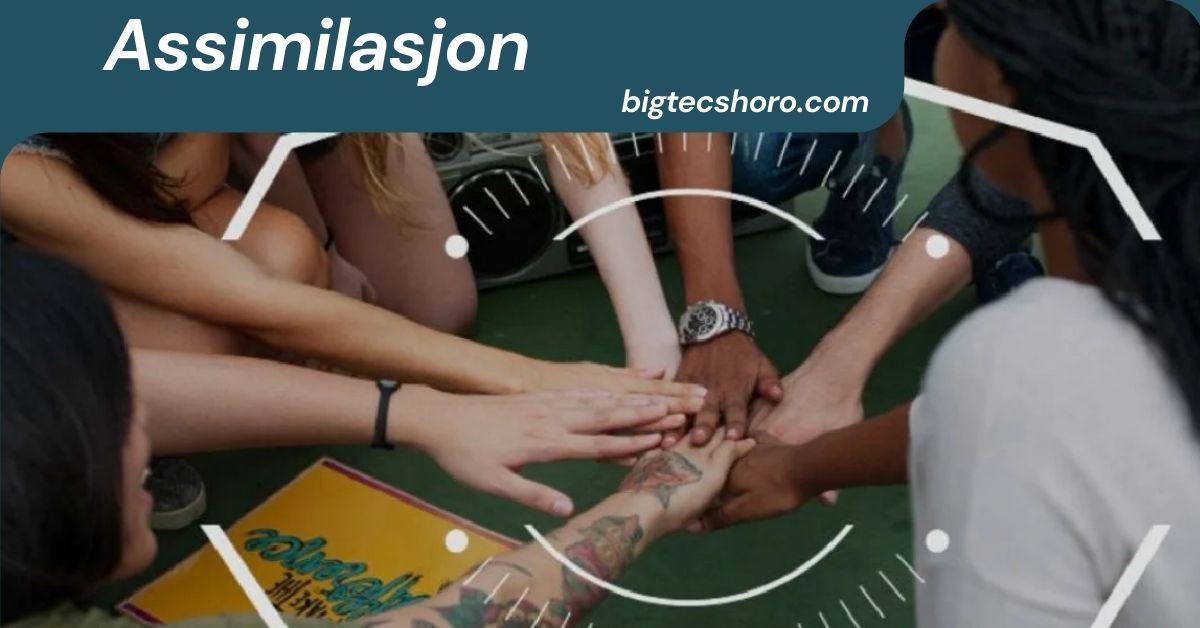

Assimilasjon is a social and cultural process that has shaped societies for centuries. In simple terms, assimilasjon happens when individuals or minority groups gradually adopt the language, traditions, values, and behaviors of a dominant culture. Over time, these individuals may become almost indistinguishable from the larger society around them.
- What Is Assimilasjon?
- The Origin and History of Assimilasjon
- Why Assimilasjon Happens
- Types of Assimilasjon
- Cultural Assimilasjon
- Structural Assimilasjon
- Marital Assimilasjon
- Identificational Assimilasjon
- Civic Assimilasjon
- The Role of Immigration in Assimilasjon
- The Assimilasjon Process Across Generations
- Benefits of Assimilasjon
- Improved Social Unity
- Better Economic Opportunities
- Stronger National Identity
- Greater Cultural Exchange
- Challenges and Criticism of Assimilasjon
- Assimilasjon vs Integration
- Assimilasjon in Modern Multicultural Societies
- Assimilasjon and Language
- Cultural Identity During Assimilasjon
- Real-World Examples of Assimilasjon
- The Future of Assimilasjon
- Expert Insight: A Balanced View of Assimilasjon
- Key Takeaways About Assimilasjon
- Frequently Asked Questions About Assimilasjon
- What does assimilasjon mean in simple terms?
- Is assimilasjon the same as cultural integration?
- How long does assimilasjon take?
- Can assimilasjon happen naturally?
- Does assimilasjon always mean losing your culture?
- Why is assimilasjon important in immigration discussions?
- Can societies benefit from assimilasjon?
- Is assimilasjon still relevant today?
- What is the difference between forced and voluntary assimilasjon?
- Can assimilasjon lead to new cultures?
- Conclusion
This concept plays a major role in immigration, cultural change, national identity, and social integration. In countries with large immigrant populations such as the United States, assimilasjon is often discussed when talking about how newcomers adapt to life in a new country.
Understanding assimilasjon is important because it affects education, government policies, community relationships, and personal identity. While some people see assimilasjon as a natural way for societies to unify, others believe it can lead to the loss of cultural heritage.
This article provides a complete and easy-to-read guide to assimilasjon. It explains the meaning, history, types, benefits, problems, and modern debates around this concept. It also includes real examples, practical insights, and frequently asked questions to help readers fully understand the topic.
What Is Assimilasjon?
Assimilasjon is the process through which a person or group gradually becomes part of another culture. This often happens when immigrants or minority groups move into a society where a different culture is dominant.
During assimilasjon, people may adopt the dominant culture’s:
Language
Social customs
Food habits
Clothing styles
Education systems
Beliefs and values
Work practices
Over time, these cultural changes can become part of everyday life. Children of immigrants often experience assimilasjon more quickly than their parents because they grow up in the new society’s schools, media, and social environments.




In many cases, assimilasjon does not happen instantly. Instead, it is a slow process that can take generations.
The Origin and History of Assimilasjon
The idea of assimilasjon has been discussed by scholars for more than a century. Early sociologists studied how immigrants in growing industrial nations adapted to new cultures.
In the late 1800s and early 1900s, many European immigrants arrived in the United States. Sociologists began studying how these groups gradually adopted American culture. They noticed that while the first generation often kept their original traditions, the second and third generations usually became more integrated into the dominant society.
Historically, assimilasjon has also been influenced by government policies. Some countries actively encouraged immigrants to adopt national languages and traditions. Others allowed cultural diversity to remain stronger.
The concept of assimilasjon has evolved over time. Today, researchers recognize that cultural integration is complex and does not always mean abandoning one’s original identity.
Why Assimilasjon Happens
Assimilasjon occurs for several reasons, and these reasons can vary from one society to another. However, several common factors often influence the process.
Social Interaction
People naturally adopt behaviors and values from the communities they interact with daily. Schools, workplaces, and neighborhoods all contribute to this cultural exchange.
Also Read: Cinndymovies: Everything You Need to Know
Economic Opportunities
In many cases, immigrants adopt the language and customs of the dominant society to improve job opportunities and financial stability.
Education Systems
Education plays a powerful role in assimilasjon. Children who attend schools in a new country quickly learn its language, history, and social norms.
Media and Technology
Modern media, social networks, and entertainment expose people to dominant cultural ideas. This constant exposure can accelerate assimilasjon.
Government Policies
Some governments encourage assimilasjon by promoting national languages, civic education, and shared cultural values.
Types of Assimilasjon
Assimilasjon can occur in different ways depending on the social environment and individual choices. Researchers often describe several types of assimilasjon.
Cultural Assimilasjon
Cultural assimilasjon happens when individuals adopt the customs, beliefs, and traditions of the dominant culture. This may include changes in language, food, clothing, and daily habits.
Structural Assimilasjon
Structural assimilasjon occurs when minority groups gain access to major social institutions such as education, employment, and government systems. It reflects deeper integration into society.
Marital Assimilasjon
Marital assimilasjon refers to intermarriage between members of minority groups and the dominant population. This can accelerate cultural blending across generations.
Identificational Assimilasjon
This type of assimilasjon occurs when individuals begin to identify themselves primarily with the dominant society rather than their original cultural group.
Civic Assimilasjon
Civic assimilasjon involves adopting the political values, laws, and civic responsibilities of the host society. It includes participation in elections, community activities, and public institutions.
The Role of Immigration in Assimilasjon
Immigration is one of the most common situations where assimilasjon takes place. When people move to a new country, they often face the challenge of adapting to unfamiliar social systems and cultural expectations.
In the United States, immigration has played a major role in shaping national culture. Over the centuries, people from Europe, Asia, Latin America, Africa, and the Middle East have contributed to American society.
While many immigrants maintain elements of their original culture, they also adopt aspects of American life. This process often includes learning English, participating in local communities, and adjusting to new social norms.
Second-generation immigrants often experience stronger assimilasjon because they grow up surrounded by the dominant culture.
The Assimilasjon Process Across Generations
Assimilasjon typically unfolds over multiple generations. Each generation experiences the process differently.
First generation immigrants usually maintain strong connections to their homeland. They often speak their native language and preserve traditional customs.
Second generation individuals are born or raised in the new country. They tend to balance both cultures, learning the dominant language while still participating in family traditions.
Third generation individuals often feel more connected to the dominant culture. By this stage, many original traditions may fade or blend into broader society.
Also Read: Lusv Basketball: Complete Guide to the Growing Student Basketball Community
This gradual change demonstrates how assimilasjon can reshape cultural identities over time.
Benefits of Assimilasjon
Assimilasjon can bring several advantages to both individuals and society. These benefits often appear when cultural integration happens in a respectful and voluntary way.
Improved Social Unity
Assimilasjon can strengthen social cohesion by creating shared values and communication systems within a diverse population.
Better Economic Opportunities
Learning the dominant language and cultural expectations can help immigrants access education, employment, and career advancement.
Stronger National Identity
Some countries view assimilasjon as a way to maintain a shared national identity among people from different backgrounds.
Greater Cultural Exchange
Although assimilasjon often involves adopting dominant cultural traits, it can also lead to cultural blending that enriches society.
Challenges and Criticism of Assimilasjon
Despite its potential benefits, assimilasjon has also been criticized by scholars, activists, and community leaders.
Loss of Cultural Identity
One major concern is that assimilasjon can lead to the loss of unique traditions, languages, and cultural heritage.
Pressure on Minority Groups
In some situations, minority groups may feel pressured to abandon their identity in order to be accepted.
Social Inequality
Assimilasjon does not always happen equally. Some groups may face discrimination or barriers that slow the process.
Cultural Dominance
Critics argue that assimilasjon can reinforce the dominance of one culture over others, limiting diversity.
Because of these concerns, many modern societies now support more balanced approaches to cultural integration.
Assimilasjon vs Integration
Assimilasjon is often confused with another concept called integration. Although they are related, they are not the same.
Assimilasjon usually means that minority groups adopt the dominant culture and gradually lose aspects of their original identity.
Integration allows individuals to participate fully in society while still maintaining their cultural traditions.
Many modern multicultural societies prefer integration over full assimilasjon because it encourages diversity while promoting social cooperation.
Assimilasjon in Modern Multicultural Societies
Today, many countries are more culturally diverse than ever before. Global migration, technology, and international trade have created societies where many cultures interact daily.
In these environments, assimilasjon often takes on new forms. Instead of complete cultural replacement, societies may experience cultural blending or hybrid identities.
For example, immigrants may celebrate traditional holidays while also participating in national traditions. Food, music, and art from different cultures can merge and influence mainstream culture.
This modern perspective suggests that assimilasjon is no longer a one-direction process. Instead, both minority and dominant cultures influence each other.
Assimilasjon and Language
Language is one of the most powerful drivers of assimilasjon. Learning the dominant language allows individuals to communicate, work, study, and participate in society.
In the United States, English language acquisition is often seen as a key step in assimilasjon. Schools, workplaces, and media all reinforce the importance of language learning.
However, many communities also maintain bilingual identities. This means people can speak the dominant language while preserving their native language at home.
Bilingualism demonstrates that assimilasjon does not always require the loss of linguistic diversity.
Cultural Identity During Assimilasjon
Assimilasjon can create complex identity experiences for individuals and families.
Some people feel proud of adopting a new national identity while still honoring their cultural roots. Others may feel tension between two cultures.
Young people often experience these challenges more strongly because they navigate both family traditions and social expectations.
Healthy assimilasjon usually involves respect for both cultures, allowing individuals to develop balanced identities.
Real-World Examples of Assimilasjon
Throughout history, many communities have experienced assimilasjon in different ways.
European immigrants who arrived in the United States in the early 20th century gradually adopted American language and customs.
Many Asian and Latin American immigrant families today experience similar processes, especially in urban areas where cultural interaction is constant.
Native communities in some countries have also experienced forced assimilasjon through government policies. These historical cases remain controversial and are often studied to understand the ethical implications of cultural change.
These examples show that assimilasjon can occur naturally or through social pressure, leading to very different outcomes.
The Future of Assimilasjon
The future of assimilasjon will likely continue evolving as societies become more connected.
Several trends are shaping this evolution:
Global migration is increasing cultural diversity
Digital media spreads cultural ideas across borders
Multicultural education encourages respect for different traditions
Cities are becoming global cultural centers
Because of these changes, assimilasjon may become less about cultural replacement and more about cultural cooperation.
Many experts believe the future will involve hybrid identities where individuals belong to multiple cultural worlds at the same time.
Expert Insight: A Balanced View of Assimilasjon
From a social science perspective, assimilasjon should not be viewed only as a loss of culture or as a perfect solution to social diversity.
Instead, it is a complex process shaped by human interaction, economic opportunity, education, and personal identity.
Healthy societies often create environments where individuals can participate fully in public life while still maintaining cultural heritage.
This balanced approach allows communities to benefit from both unity and diversity.
Also Read: Myreadignamga: The Popular Online Manga Reading Platform
Key Takeaways About Assimilasjon
Assimilasjon is a long-term social process that influences how individuals and communities interact.
It often occurs through language learning, education, and social participation.
The process can bring benefits such as economic opportunity and social unity, but it may also raise concerns about cultural loss.
Modern societies increasingly recognize that cultural integration does not always require full assimilasjon.
Instead, many communities now support inclusive systems where cultural diversity and social participation exist together.
Frequently Asked Questions About Assimilasjon
What does assimilasjon mean in simple terms?
Assimilasjon means adapting to a new culture. It happens when individuals or groups adopt the language, traditions, and behaviors of a dominant society.
Is assimilasjon the same as cultural integration?
No. Assimilasjon usually means adopting the dominant culture and gradually losing original traditions. Integration allows people to participate in society while still maintaining their cultural identity.
How long does assimilasjon take?
Assimilasjon often takes multiple generations. The first generation may keep strong ties to their homeland, while later generations become more connected to the new society.
Can assimilasjon happen naturally?
Yes. In many cases, assimilasjon happens naturally through everyday interactions such as school, work, friendships, and media exposure.
Does assimilasjon always mean losing your culture?
Not necessarily. Many people maintain elements of their original culture while also adopting aspects of the dominant society.
Why is assimilasjon important in immigration discussions?
Assimilasjon is often discussed because it affects how immigrants adapt to new environments, participate in the economy, and interact with broader society.
Can societies benefit from assimilasjon?
Yes. When it occurs respectfully, assimilasjon can promote communication, economic opportunity, and social unity.
Is assimilasjon still relevant today?
Yes. Even in modern multicultural societies, assimilasjon continues to influence how cultures interact and evolve.
What is the difference between forced and voluntary assimilasjon?
Voluntary assimilasjon happens when individuals choose to adopt aspects of a new culture. Forced assimilasjon occurs when governments or institutions pressure groups to abandon their traditions.
Can assimilasjon lead to new cultures?
Yes. When different cultures interact over time, they often create blended traditions, languages, and lifestyles that form entirely new cultural identities.
Conclusion
Assimilasjon is the process through which individuals or groups gradually adopt the language, values, and customs of a dominant society. It often happens when people move to a new country or live within a different cultural environment. While assimilasjon can help individuals integrate into society and access better opportunities, it can also raise concerns about losing cultural identity. In modern multicultural societies, the idea of assimilasjon is evolving, with many communities encouraging a balance between adapting to the larger culture and preserving unique traditions. Understanding assimilasjon helps us see how cultures interact, change, and shape the diverse societies we live in today.