







In today’s fast-changing digital world, software projects rarely go exactly as planned. Business needs shift, users change their expectations, and new technologies appear quickly. Traditional project planning methods often struggle in this environment.
- What is Adaptive Software Development in Simple Words
- History and Origin of Adaptive Software Development
- Core Idea Behind Adaptive Software Development
- Adaptive Software Development (ASD) is Based on What Scientific Theory
- What is Adaptive Software Development in Project Management
- Phases of Adaptive Software Development
- Key Principles of Adaptive Software Development
- 1. Continuous Learning
- 2. Embrace Change
- 3. Customer Collaboration
- 4. Iterative Development
- 5. Risk Reduction Through Feedback
- How Adaptive Software Development Works in Real Projects
- Step 1: Start with a Rough Idea
- Step 2: Build a Small Version
- Step 3: Get Feedback
- Step 4: Improve the Product
- Step 5: Repeat the Cycle
- Adaptive Software Development vs Agile vs Waterfall
- Advantages of Adaptive Software Development
- 1. Flexibility
- 2. Better User Satisfaction
- 3. Faster Problem Detection
- 4. Reduced Project Failure
- 5. Encourages Innovation
- Disadvantages of Adaptive Software Development
- 1. Less Predictability
- 2. Requires Skilled Teams
- 3. Continuous User Involvement Needed
- 4. Can Be Hard to Manage
- When to Use Adaptive Software Development
- Real-World Applications of ASD
- Tools Used in Adaptive Software Development
- Common Mistakes in Adaptive Software Development
- Future of Adaptive Software Development
- Key Insight: Why Adaptive Software Development is So Powerful
- Conclusion: Understanding What is Adaptive Software Development in Today’s World
- FAQs About Adaptive Software Development
This is where the concept of what is adaptive software development becomes extremely important.
Adaptive Software Development (ASD) is a flexible and modern approach to building software that focuses on learning, adjusting, and improving throughout the project instead of following a strict fixed plan. It helps teams respond quickly to change and deliver better results for users.
Unlike older methods that depend on long-term planning and fixed requirements, ASD accepts that change is normal and builds processes around it.
In simple words, adaptive software development is about “planning less, learning more, and adjusting continuously.”
What is Adaptive Software Development in Simple Words
If we define it in the simplest way, what is adaptive software development can be explained as:
A software development approach where teams continuously adapt their plans, designs, and solutions based on feedback, learning, and changing requirements.
Instead of trying to predict everything at the start, ASD encourages teams to:



- Build quickly
- Test early
- Learn from users
- Improve step by step
This makes it very useful for modern software projects like mobile apps, web platforms, AI systems, and cloud-based services.
Also read:TheHRWP: The HR Platform Transforming Modern Workforce Management
History and Origin of Adaptive Software Development
Adaptive Software Development was introduced in the 1990s by software expert Jim Highsmith. It was created as a response to the limitations of traditional project management models like Waterfall.
At that time, many software projects were failing because:
- Requirements changed during development
- Clients were unsure of what they wanted
- Technology evolved faster than planning cycles
Jim Highsmith and his colleagues proposed a new idea: instead of resisting change, embrace it.
This thinking led to Adaptive Software Development, which later influenced modern Agile methods.
Core Idea Behind Adaptive Software Development
The core idea of ASD is very simple:
“Software development is a learning process, not just a production process.”
This means:
- You don’t know everything at the start
- You discover better solutions while building
- Feedback is more important than rigid planning
ASD treats software development as a living system that grows and changes over time.
Adaptive Software Development (ASD) is Based on What Scientific Theory
A very important question in software engineering is:
adaptive software development asd is based on what scientific theory
The answer is:
Adaptive Software Development is based on Complex Adaptive Systems (CAS) theory.
Understanding Complex Adaptive Systems
A complex adaptive system is a system where many parts interact with each other and adapt based on changes in the environment.
Examples include:
- The human brain
- Ecosystems in nature
- Traffic systems
- Financial markets
- Social networks
In these systems:
- No single part controls everything
- Behavior emerges from interaction
- Systems evolve over time
How This Applies to Software Development
In ASD:
- Developers, testers, users, and stakeholders interact continuously
- Requirements evolve based on feedback
- The final product “emerges” instead of being fully designed upfront
So, ASD applies the idea that software projects behave like living systems rather than machines.
What is Adaptive Software Development in Project Management
Another important concept is:
what is adaptive software development in project management
In project management, ASD is a flexible approach where:
- Plans are not fixed from the beginning
- Teams work in short cycles
- Feedback is continuously used to adjust direction
Traditional vs Adaptive Project Management
Traditional project management:
- Fixed scope
- Fixed timeline
- Fixed budget
- Limited change allowed
Adaptive project management:
- Flexible scope
- Evolving timeline
- Continuous changes allowed
- Feedback-driven decisions
Why ASD Works Better in Modern Projects
Modern software projects face uncertainty. ASD works better because it:
- Reduces risk of failure
- Improves user satisfaction
- Supports innovation
- Adapts to market changes
Phases of Adaptive Software Development
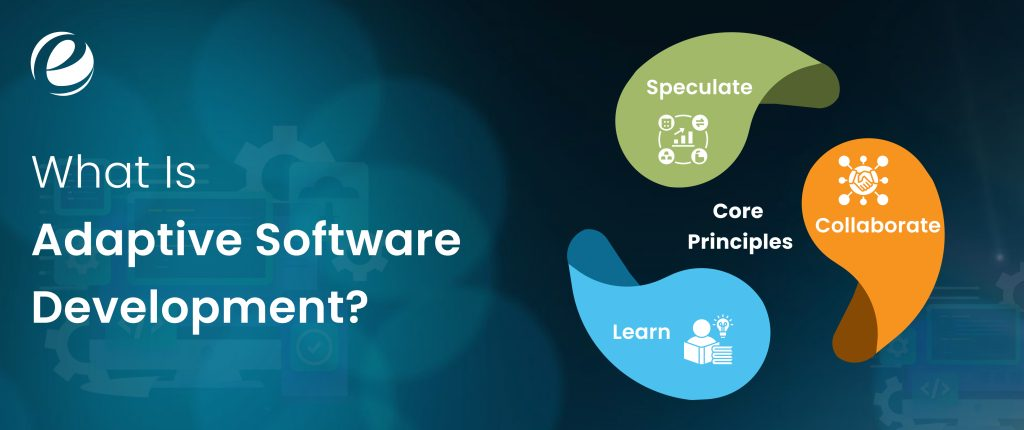
ASD is built around three main phases:
1. Speculate Phase
In this phase, the team does not create a fixed plan. Instead, they “speculate” on what might work.
Also read:What Is a Technology Park A Complete Guide for Beginners in 2026
Activities include:
- Understanding business goals
- Creating a flexible roadmap
- Identifying risks and assumptions
Unlike traditional planning, this phase accepts uncertainty.
2. Collaborate Phase
This phase focuses on teamwork and communication.
Key points:
- Developers and customers work closely
- Continuous feedback is shared
- Problems are solved together
- Knowledge is shared across the team
Collaboration is the heart of ASD.
3. Learn Phase
This is the most important phase.
In this phase:
- The team reviews results
- User feedback is analyzed
- Mistakes are identified
- Improvements are planned
Learning is continuous, not final.
Key Principles of Adaptive Software Development
ASD is built on several important principles:
1. Continuous Learning
Every step teaches something new.
2. Embrace Change
Change is not a problem—it is expected.
3. Customer Collaboration
Users are involved throughout development.
4. Iterative Development
Work is done in small cycles.
5. Risk Reduction Through Feedback
Problems are identified early.
How Adaptive Software Development Works in Real Projects
Let’s understand how ASD works in real life:
Step 1: Start with a Rough Idea
The team defines general goals.
Step 2: Build a Small Version
A basic working version is created quickly.
Step 3: Get Feedback
Users test and share opinions.
Step 4: Improve the Product
Changes are made based on feedback.
Step 5: Repeat the Cycle
The process continues until the product is ready.
This cycle makes development faster and more accurate.
Adaptive Software Development vs Agile vs Waterfall
Waterfall Model
- Linear and fixed
- One phase after another
- Hard to change
Agile Model
- Iterative and flexible
- Focus on customer feedback
- Popular in modern development
Adaptive Software Development
- More flexible than Agile
- Focuses on learning and adaptation
- Accepts uncertainty as normal
ASD can be seen as a foundation that influenced Agile development.
Advantages of Adaptive Software Development
1. Flexibility
It easily adapts to changing requirements.
2. Better User Satisfaction
Users are involved throughout the process.
3. Faster Problem Detection
Issues are identified early.
4. Reduced Project Failure
Continuous feedback reduces risks.
5. Encourages Innovation
Teams can experiment freely.
Disadvantages of Adaptive Software Development
Even though ASD is powerful, it has challenges:
1. Less Predictability
It is hard to estimate exact time and cost.
2. Requires Skilled Teams
Teams must be experienced and flexible.
3. Continuous User Involvement Needed
Without feedback, ASD cannot work properly.
4. Can Be Hard to Manage
Frequent changes require strong coordination.
When to Use Adaptive Software Development
ASD is best for:
- Startups building new products
- Software with unclear requirements
- Projects with changing user needs
- Innovative or experimental systems
- AI and modern cloud applications
It is not ideal for highly regulated or fixed-scope projects.
Also read:What Is Technology Enablement: A Complete Guide for Modern Businesses and Everyday Life
Real-World Applications of ASD
ASD is widely used in modern industries:
- Mobile app development
- SaaS platforms
- E-commerce systems
- Artificial intelligence projects
- Game development
Companies prefer ASD when innovation and speed are important.
Tools Used in Adaptive Software Development
Teams often use tools like:
- Jira for task tracking
- Trello for workflow management
- GitHub for code collaboration
- Slack for communication
- CI/CD tools for continuous delivery
These tools support flexibility and fast updates.
Common Mistakes in Adaptive Software Development
1. Ignoring User Feedback
Without feedback, ASD fails.
2. Lack of Communication
Poor collaboration slows progress.
3. Over-Planning
Too much planning reduces adaptability.
4. Weak Testing
Continuous testing is essential.
Future of Adaptive Software Development
The future of ASD is very strong because:

- Software systems are becoming more complex
- AI is changing development processes
- Businesses need faster delivery
- Users expect continuous updates
ASD is likely to evolve further with automation and AI integration.
Key Insight: Why Adaptive Software Development is So Powerful
The biggest strength of ASD is not just flexibility—it is learning.
Instead of assuming everything at the start, ASD accepts that:
- You learn while building
- You improve while testing
- You succeed by adapting
This mindset is what makes ASD different from older methods.
Conclusion: Understanding What is Adaptive Software Development in Today’s World
To summarize, what is adaptive software development is more than just a method—it is a mindset.
It teaches that:
- Change is normal
- Learning is continuous
- Feedback is essential
- Flexibility leads to success
Based on Complex Adaptive Systems theory, ASD reflects how real-world systems behave. In project management, it offers a powerful alternative to rigid planning methods by focusing on adaptation and learning.
In modern software development, where uncertainty is high and speed matters, Adaptive Software Development remains one of the most effective approaches for building successful digital products.
FAQs About Adaptive Software Development
Is Adaptive Software Development the same as Agile?
No. Agile is inspired by ASD, but ASD focuses more on learning and adaptation as a scientific process.
Who created Adaptive Software Development?
It was created by Jim Highsmith in the 1990s.
What industries use Adaptive Software Development?
It is widely used in software, AI, startups, and digital product development.
Is ASD suitable for beginners?
It is better suited for experienced teams because it requires flexibility and strong collaboration.
What is the main goal of Adaptive Software Development?
The main goal is to deliver better software through continuous learning and adaptation.